How to Build a Digital Marketing Strategy with a Consultant
 Yash Mittal
Table of Contents
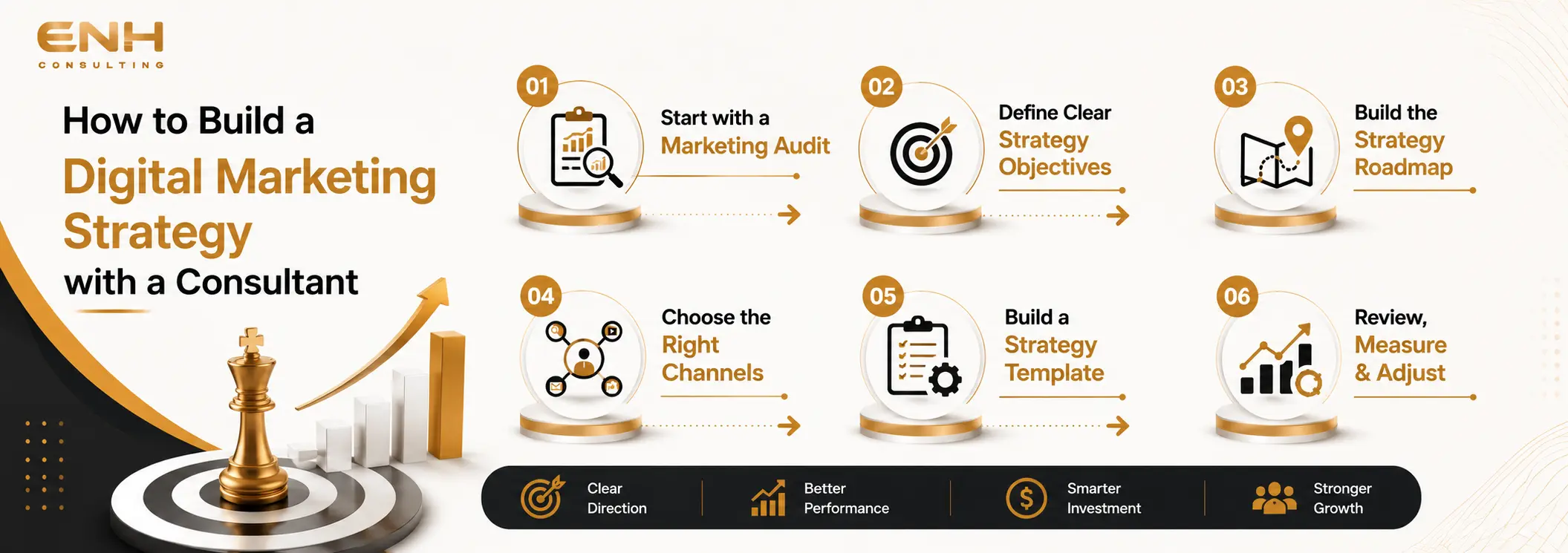
- Step 1: Start with a Digital Marketing Audit
- Step 2: Define Clear Digital Marketing Strategy Objectives
- Step 3: Build the Digital Marketing Roadmap
- Step 4: Choose the Right Channels for Your Business
- Step 5: Build the Digital Marketing Strategy Template for Your Team
- Step 6: Review, Measure, and Adjust
- Final Thoughts
Most businesses that struggle with digital marketing are not struggling because they lack effort. They are struggling because they lack direction.
They are posting on social media, running ads, publishing blogs - but nothing connects. There is no digital marketing roadmap tying it all together, no clear sequence of what to do first, and no way to tell what is actually working.
This is exactly where working with a consultant changes things. A good consultant does not just tell you to "do more SEO" or "be more consistent on Instagram." They build you a proper digital marketing strategy framework - one that is specific to your business, your audience, and your resources.
Here is how that process actually works.
Step 1: Start with a Digital Marketing Audit
Before building anything, a consultant needs to understand where things stand today.
A digital marketing strategy audit covers everything - how the website performs on search engines, how paid campaigns are structured and what they are costing per lead, what content exists and whether it is reaching the right people, how analytics are set up and whether the data can actually be trusted. If you are unsure what this process involves in practice, what a digital marketing consultant does day to day covers exactly how audits and diagnosis work inside a real engagement.
A retail brand came in convinced their problem was content. The audit told a different story - their Google Ads account had 60% of budget going to broad match keywords with no commercial intent, and their website had a 4.2-second load time on mobile. The content was fine. The foundation was broken. Audit first. Always.
Step 2: Define Clear Digital Marketing Strategy Objectives
Once the audit is complete, the consultant works with you to set digital marketing strategy objectives - not vague goals like "grow our online presence" but specific, measurable targets tied to business outcomes.
Things like: increase organic leads by 40% in six months, reduce cost per acquisition on paid search from $85 to $55, or grow email revenue contribution from 12% to 25% of total monthly revenue.
Clear objectives do two things. They give the strategy a direction everyone can actually follow. And they give you a way to hold the consultant accountable for real results, not just activity.
Step 3: Build the Digital Marketing Roadmap
This is where the strategy takes shape. The digital marketing roadmap translates the objectives into a prioritized, phased plan - what gets done first, what gets done next, and why.
For most businesses, the roadmap is split into phases. Phase one covers quick wins - fixing the highest-impact technical issues, pausing wasted ad spend, tightening conversion on existing landing pages. These deliver results fast and fund the longer work ahead.
Phase two covers sustainable growth - SEO content, email retention, B2B digital marketing strategy refinements if the audience requires it, and building the channels that compound over time.
Phase three is optimization - using real performance data to double down on what is working and cut what is not.
A digital marketing growth strategy built this way avoids the trap most businesses fall into: trying to do everything at once, spreading budget thin, and getting mediocre results across all channels instead of strong results in the right ones.
Step 4: Choose the Right Channels for Your Business
A digital marketing channel strategy is not about being everywhere. It is about being in the right places with the right message.
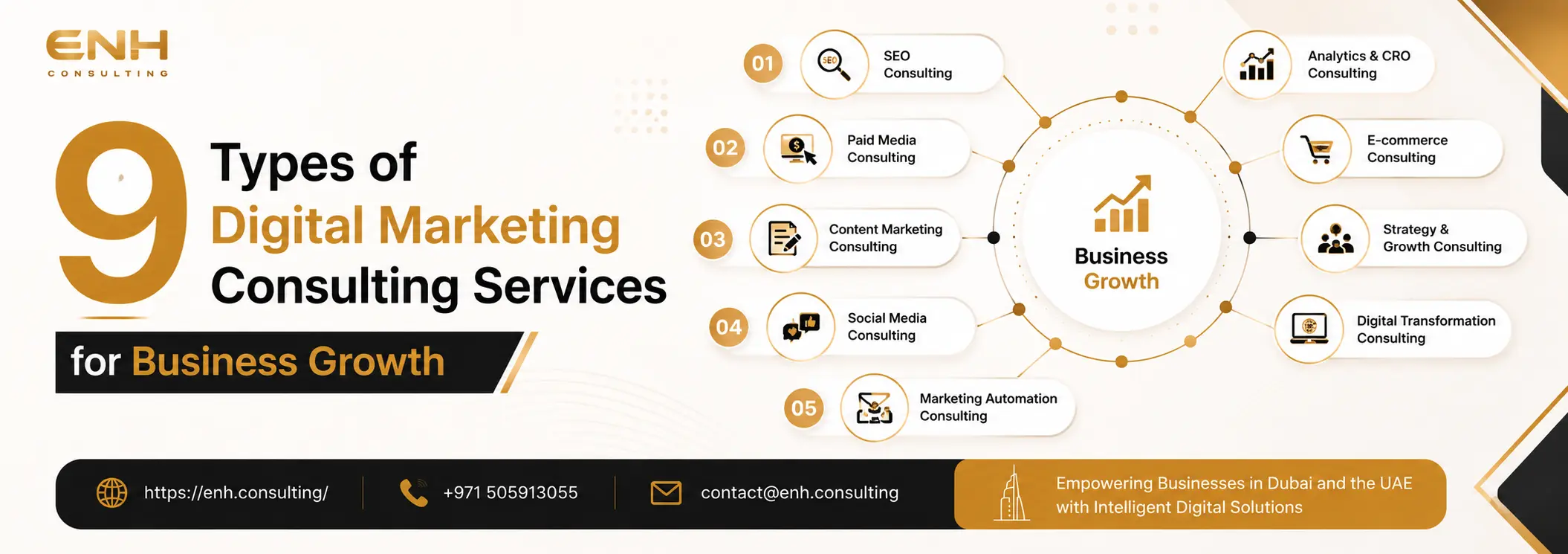
An online marketing strategy consultant will assess where your audience actually spends time, how they make buying decisions, and what channels your competitors are and are not using effectively. For a full breakdown of the options available, 9 types of digital marketing consulting services covers each one clearly. From there, the recommendation is usually two or three channels to focus on seriously - not eight channels managed badly.
For a B2B business with a three-month sales cycle, LinkedIn and SEO-driven content typically outperform Instagram and display ads. For a D2C brand selling impulse purchases, the equation flips entirely. The channel strategy follows the customer, not the trend.
Step 5: Build the Digital Marketing Strategy Template for Your Team
Once the strategy is clear, a good consultant does not just hand over a document. They build a working digital marketing strategy template - a practical framework your internal team can follow week to week without needing the consultant in every meeting.
This covers: what gets published and when, who is responsible for what, how performance gets reviewed, and what triggers a strategy adjustment versus what is just normal variance. It turns a strategy into a system.
Step 6: Review, Measure, and Adjust
Digital marketing strategy consulting is not a one-time event. The best results come from regular review cycles - typically monthly - where performance gets assessed against the original objectives, what is working gets more resources, and what is not gets fixed or cut.
A digital marketing strategy with a consultant works best when there is a feedback loop built in from the start. Markets shift, algorithms change, and customer behavior evolves. A static strategy from month one is rarely still the right strategy by month six.
Final Thoughts
Building a digital marketing roadmap with a consultant is not complicated - but it does require doing things in the right order. Audit before strategy. Strategy before execution. Execution before optimization.
If your business is currently doing it the other way around - spending before there is a clear plan - that is usually where the wasted budget lives.
ENH Consulting's digital marketing consulting services are built around exactly this process - starting with an honest audit, building a strategy specific to your business, and staying involved through execution to make sure results actually follow.
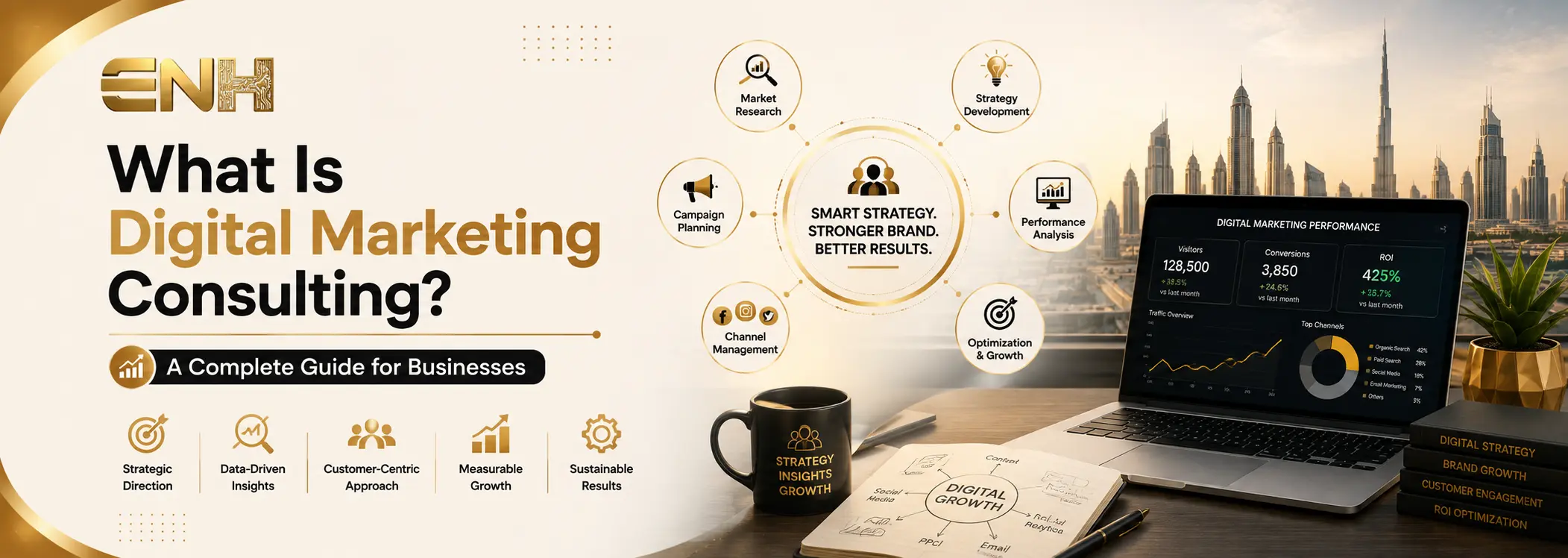
For a broader understanding of how digital marketing consulting works before you commit to anything, that is a good place to start.
Frequently Asked Questions
Q. What is a digital marketing roadmap?
A. A digital marketing roadmap is a phased, prioritized plan that maps out which marketing activities to do, in what sequence, and toward what specific business outcomes. It connects strategy to execution - so the team knows exactly what they are doing and why, rather than running disconnected activity across channels with no clear direction.
Q. What should a digital marketing strategy include?
A. A complete digital marketing strategy framework includes a current-state audit, clear business objectives, a channel strategy, a phased execution roadmap, a content and campaign plan, a measurement framework, and a review cadence. Missing any of these usually means the strategy looks good on paper but breaks down when the team tries to execute it.
Q. What is a digital marketing strategy audit?
A. A digital marketing strategy audit is a structured review of how a business currently markets itself online - covering SEO performance, paid campaign efficiency, content quality, analytics accuracy, and conversion rates. It identifies which areas are limiting performance before any new strategy gets built on top of them.
Q. How long does it take to build a digital marketing strategy with a consultant?
A. For most SMEs, the audit and strategy phase takes two to four weeks. Larger businesses with multiple channels or markets typically need four to six weeks. The timeline depends on how much existing data is available and how quickly stakeholders can align on objectives and priorities.
Q. What does a digital marketing strategy consultant do?
A. A digital marketing strategy consultant audits current performance, sets measurable objectives, builds a prioritized roadmap, recommends the right channels, and creates the frameworks your team needs to execute consistently. They focus on business outcomes - not just marketing activity - and stay involved to adjust the strategy as real data comes in.
About Yash Mittal
Yash Mittal is the Founder of ENH Consulting with around 15 years of experience in business strategy, consulting, digital transformation, and organizational growth. He works closely with businesses to identify challenges, improve operations, evaluate growth opportunities, and build practical strategies aligned with long-term objectives. At ENH Consulting, Yash contributes insights across business consulting, AI consulting, business growth, process improvement, digital transformation, and strategic decision-making. His approach focuses on combining business understanding with practical, results-oriented solutions that help organizations improve performance and adapt to changing market conditions. Through his articles, Yash shares practical perspectives to help business owners, entrepreneurs, and decision-makers make more informed strategic decisions.