Website Redesign vs Rebuild: Which Does Your Business Need?
 Vikas Kumar Singh
Table of Contents
- Website Redesign vs Rebuild: What's the Difference?
- When Is a Website Redesign Enough?
- When Does Your Website Need a Full Rebuild?
- Website Redesign vs Rebuild at a Glance
- What Should You Evaluate Before Deciding?
- How Does SEO Affect a Website Redesign or Rebuild?
- Website Redesign Cost vs Website Rebuild Cost
- How Long Does a Website Redesign or Rebuild Take?
- Website Refresh vs Redesign vs Rebuild
- Website Redesign Checklist: Which Option Does Your Business Need?
- Common Website Redesign Mistakes to Avoid
- Final Thoughts
Some websites look old but work perfectly fine. Others look okay on the surface but are slow, hard to update, or can't handle new features. So the real question in website redesign vs rebuild isn't "does my site look dated?" It's "what's actually causing the problem?"
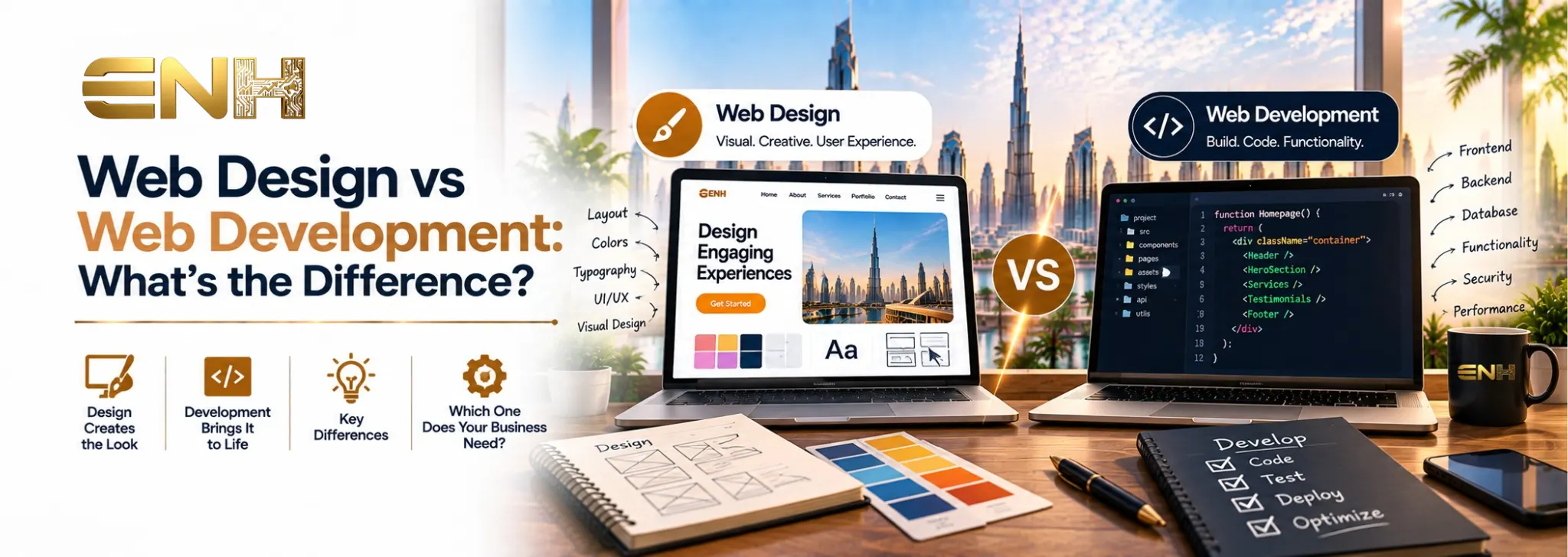
A website redesign usually improves what you already have. A website rebuild replaces or heavily changes the technical foundation underneath. Which one you need depends on where the trouble really sits. If you're new to how sites get built, start with our guide on what web development is.
Website Redesign vs Rebuild: What's the Difference?
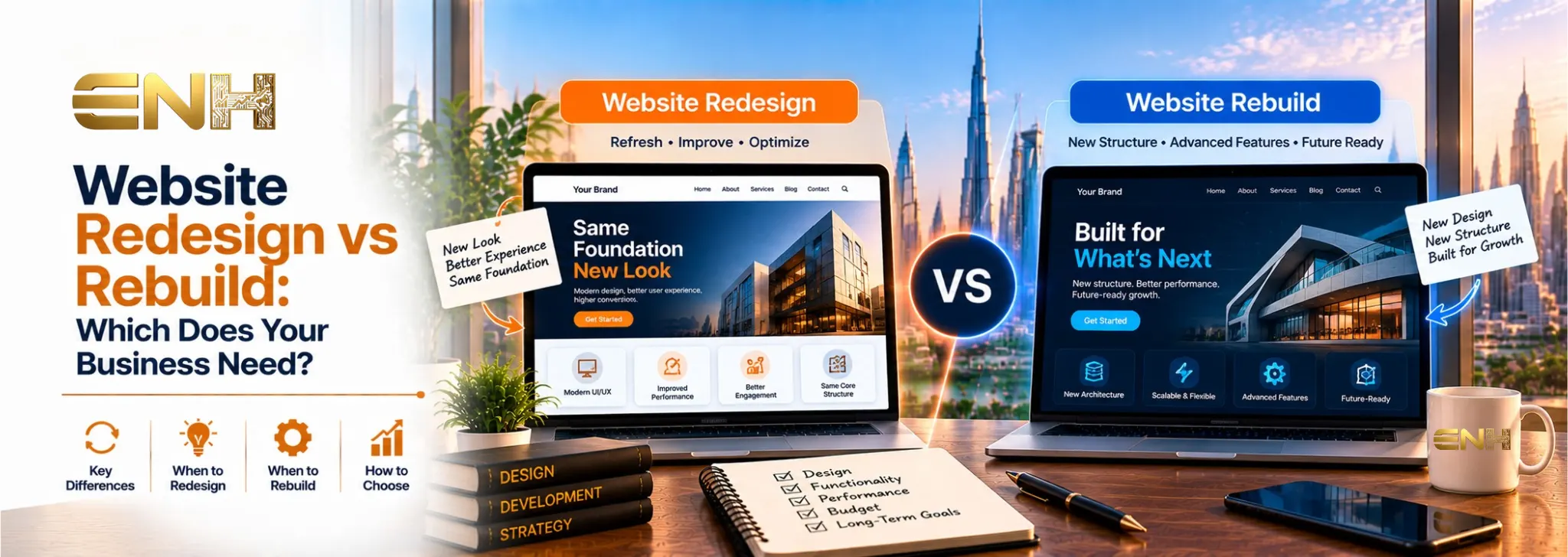
A website redesign changes how your site looks, feels, and is organized, while keeping most of what's under the hood. A website rebuild replaces or heavily changes the underlying code, platform, or structure. If the problem is visual or about content, think redesign. If the problem is technical or about the foundation, think rebuild.
A redesign can cover layout, navigation, branding, content structure, and certain features on the same platform. A rebuild replaces the code, templates, CMS, or overall architecture.
When Is a Website Redesign Enough?
A website redesign is often enough when the foundation is still solid. If you're wondering whether to redesign your website, ask whether the main problems are about how it looks and how people use it, not how it runs. A redesign usually does the job when:
Your platform or CMS is still healthy and supported
The site loads at an acceptable speed
It can handle the features you need
The real problems are design, messaging, navigation, or the path visitors take to contact you
Your branding has changed
Only some pages need work
The benefits of a website redesign can include a clearer visual identity, easier navigation, and a smoother path for visitors to take action. It also doesn't always mean a new platform or new URLs - you can often refresh the experience while keeping the structure that works.
When Does Your Website Need a Full Rebuild?
A website rebuild makes sense when the technical foundation is holding your business back, not just because the site looks old. Age alone isn't a reason to start over.
Website redevelopment, sometimes called website modernization, is worth considering when you see signs like these:
Your CMS is outdated or no longer supported
The same technical problems keep coming back
The site is slow and no amount of tuning fixes it
Security issues keep showing up
Updating content is a daily struggle
You can't add features you need
The site can't grow with your business
Integrations with other tools keep breaking
The structure is outdated or the platform has hard limits
Before committing, use a simple website rebuild checklist: write down the specific limits you're hitting and confirm a redesign really can't solve them. If it can, rebuilding is probably more than you need.
Website Redesign vs Rebuild at a Glance
If you just want the short version, here's how the two compare.
What Should You Evaluate Before Deciding?
A good website redesign strategy starts with diagnosis rather than appearance. Before deciding whether to redesign or rebuild, evaluate these four areas.
Business Goals and Conversions
Does the site still match your current services, your audience, and how you want to get leads? If your business has changed and the site hasn't, a website redesign for better conversions may be all you need.
User Experience and Content
Check your navigation, how pages are organized, how it works on phones, how fresh your content is, and whether your calls to action are clear. UX problems like these can often be addressed through a redesign without changing the underlying platform. If you are still unclear about the difference between design changes and development work, see our guide on web design vs web development.
Technology and Scalability
Look at your CMS, your integrations, any built-up technical mess (often called technical debt), and whether the site can grow and still be easy to maintain. If the platform itself is the roadblock, website replat forming - moving to a different platform - may become part of the rebuild. If you are also deciding whether to stay with a template-based setup or move toward a more customized build, see our guide on custom website vs template website.
Performance and Security
Test how fast the site loads, note any errors that keep returning, and check for plugins or frameworks that are no longer supported or updated. Security gaps are an especially strong rebuild signal.
How Does SEO Affect a Website Redesign or Rebuild?
SEO risk during a website redesign is generally lower when important URLs, content, and site structure remain stable. A rebuild that changes your URLs, platform, or structure carries more risk, so website migration SEO needs real planning.
If URLs, CMS, structure, or navigation change, here's what to do:
Map each old URL to its new one
Set up the right redirects
Keep your valuable content
Update internal links
Submit an updated sitemap
Watch indexing and Google Search Console after launch
Handling SEO during a website redesign well means protecting what's already working before you change anything else. This is only a quick overview; a full migration needs its own careful plan.
Website Redesign Cost vs Website Rebuild Cost
Website redesign cost is usually lower than website rebuild cost, because a redesign keeps more of your existing system. A rebuild needs more development and more work moving your content over.
There is no single website redesign or rebuild cost because project scope varies widely. Page count, design and UX complexity, content migration, custom functionality, integrations, platform changes, and testing all affect the final investment. For local pricing, see our guide to website development costs in Dubai.
How Long Does a Website Redesign or Rebuild Take?
A website redesign timeline is usually shorter because more of the existing website remains in place. How long a website redesign takes depends on the number of pages, design scope, content changes, integrations, and testing required.
A website rebuild timeline is usually longer because it involves more steps: discovery, planning the structure, design, development, moving content, testing, and launch. For a deeper breakdown of project timelines, see our guide on how long it takes to build a business website.
Website Refresh vs Redesign vs Rebuild
People mix these three terms up all the time, so here's a simple way to separate them.
Refresh: small visual or content updates, like new images, updated text, or a fresh color scheme
Redesign: bigger improvements to design, user experience, and content
Rebuild: the technical foundation gets mostly replaced
Think of it as a ladder: Refresh → Redesign → Rebuild. Visual or content problems point to a redesign. Technical or foundation problems point to a rebuild.
Website Redesign Checklist: Which Option Does Your Business Need?
Use this quick website redesign checklist for planning your next step.
Choose a redesign if:
Your platform still works well
Design, UX, or content are the main issues
You can add the features you need
Maintenance is manageable
Consider a rebuild if:
The technical foundation is limiting your growth
Security or speed problems won't go away
Your CMS is outdated
New features only work through workarounds
The site's structure can't support what your business needs now
Common Website Redesign Mistakes to Avoid
A few website redesign mistakes come up again and again:
Redesigning only for looks: a prettier site that still doesn't convert hasn't solved much
Ignoring your existing SEO: years of search visibility can be lost quickly
Changing URLs without redirects: visitors and search engines hit dead ends
Skipping clear business goals: without them, you can't judge success
Rebuilding before finding the real problem: you may spend far more than you needed to
Frequently Asked Questions
Q. Should I redesign or rebuild my website?
A. Redesign if your site works fine but looks dated, confusing, or doesn't bring in enquiries. Rebuild if the problem is deeper, like slow speed, security issues, an outdated platform, or features you can't add. Find the real cause first, then choose. Age alone isn't a reason to start over.
Q. What is the difference between a website redesign and rebuild?
A. A redesign changes how your website looks and works, like the layout, navigation, and content, while keeping its technical base. A rebuild replaces that base, meaning the code, platform, or structure underneath. Redesign fixes look and experience problems. Rebuild fixes technical ones.
Q. How much does a website redesign cost?
A. There's no fixed price. Website redesign cost depends on how many pages you have, how complex the design is, how much content needs moving, and whether you need custom features. A redesign usually costs less than a rebuild because more of your current site stays in place.
Q. How long does a website redesign take?
A. It depends on your site's size and how much it changes. A small redesign can move quickly, while a larger one takes longer. A redesign usually finishes faster than a rebuild because your current platform and much of your content can stay as they are.
Q. Can a website redesign affect SEO?
A. Yes. SEO risk is generally lower when important URLs, content, internal links, and site structure remain stable. But changing URLs or site structure can hurt your Google rankings if old pages aren't redirected to new ones. Planning this before launch helps protect the search visibility you've already built.
Final Thoughts
A redesign makes sense when your foundation still works and the main issues are how the site looks, how people use it, or what it says. A rebuild makes sense when the foundation itself limits speed, security, growth, features, or upkeep. Start by finding the real problem, then pick the scope that fits it.
If your website needs deeper technical changes rather than surface-level improvements, explore our web development services in Dubai to see how ENH Consulting approaches business websites and web applications.
About Vikas Kumar Singh
Vikas Kumar Singh is the Development Head at ENH Consulting with 9 years of experience in web development, mobile app development, and technology-driven business solutions. He focuses on building reliable, scalable, and user-focused digital products that support business objectives and long-term growth. At ENH Consulting, Vikas contributes technical expertise across website development, application development, development strategy, performance, scalability, and modern technology solutions. He works closely with project teams to ensure technical decisions are aligned with functionality, usability, and business requirements. Through his articles, Vikas shares practical insights on web technologies, application development, software solutions, and the technical considerations businesses should evaluate when planning digital projects.