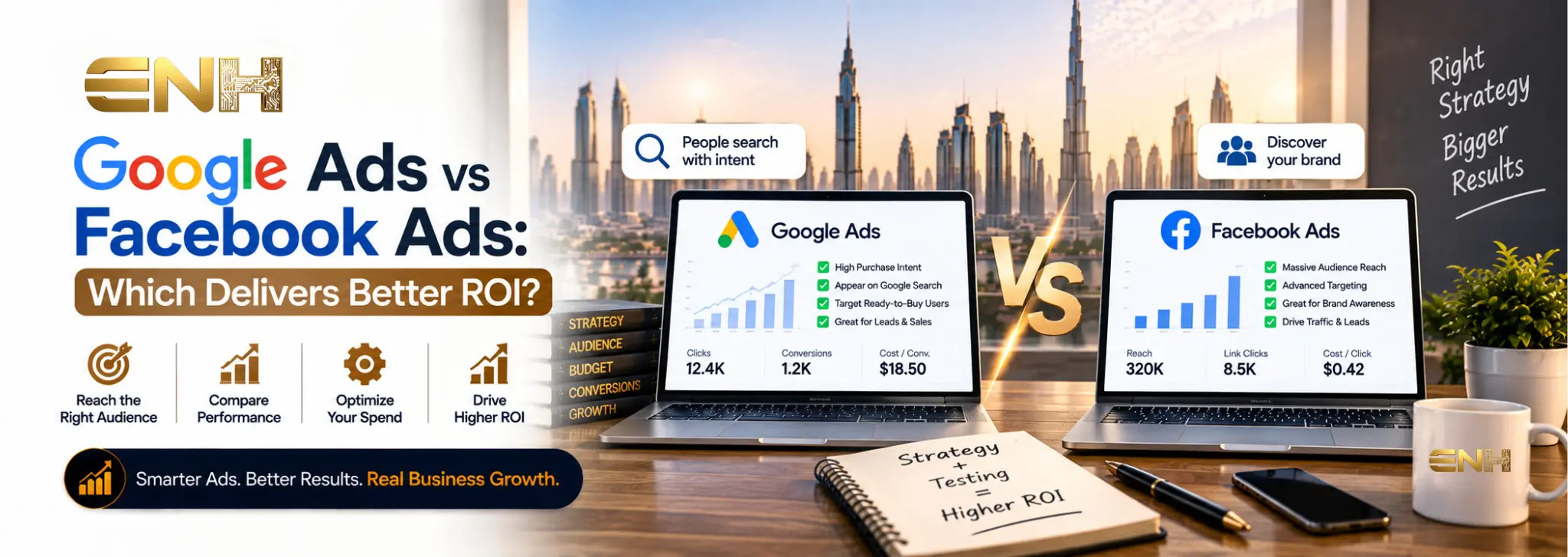
Google Ads vs Facebook Ads: Which Delivers Better ROI?
 Lucky Sippy
Table of Contents
- Google Ads vs Facebook Ads: What's the Difference?
- Google Ads vs Meta Ads: Are They the Same Comparison?
- Google Ads vs Facebook Ads Cost: Which Requires More Budget?
- Google Ads vs Facebook Ads: Which Reaches Customers With Stronger Buying Intent?
- Facebook Ads vs Google Ads for Lead Generation
- Google Ads vs Facebook Ads: Which Delivers Better ROI?
- Google Ads vs Facebook Ads for E-commerce Businesses
- Google Ads vs Facebook Ads for Small Businesses
- When Should You Choose Google Ads or Facebook Ads?
- Can Google Ads and Facebook Ads Work Together?
- How to Test Which Advertising Platform Delivers Better ROI
- Final Thoughts: Google Ads or Facebook Ads?
You've got a budget to spend on ads and no easy way to know whether it should go to Google or Facebook. Both can generate leads and sales, but they reach people in completely different ways. Google Search ads catch people actively searching for something specific. Facebook ads reach people based on interests and behavior, often before they're searching for anything at all - and that includes Facebook's broader Meta placements across Instagram too. Actual ROI comes down to your setup, your customer value, and how well each campaign converts, not which platform has the better reputation. This is a practical comparison of costs, targeting, leads, and ROI, not a verdict on which one wins.
Google Ads vs Facebook Ads: What's the Difference?
Google Ads and Facebook Ads reach potential customers in different ways. Google Search advertising captures demand that already exists - someone typed something in. Facebook advertising reaches people based on who they are and what they do on the platform, including people who aren't currently looking for what you sell. Google also runs formats beyond Search, and Meta Ads covers more than just Facebook itself.
Google Ads vs Meta Ads: Are They the Same Comparison?
Not quite. Meta Ads is the broader umbrella for advertising across everything Meta supports - Facebook, Instagram, and other placements. Facebook Ads specifically means Facebook. So when a business compares Google Ads against Facebook and Instagram advertising, they're really comparing Google Ads against a wider Meta approach, not just one platform.
Google Ads vs Facebook Ads Cost: Which Requires More Budget?
Neither platform has one universal price tag. What you actually pay depends on your industry and how much competition you're up against, your audience or keyword targeting, geographic market, campaign objective, ad quality and creative, landing page performance, and bidding strategy. It also matters whether you're comparing CPC, CPM, cost per lead, or customer acquisition cost - these aren't interchangeable, and mixing them up leads to bad comparisons.
Example: Why a Cheaper Click Isn't Always Better
Say one campaign brings in clicks at a bargain price but barely any of those visitors become paying customers. Another campaign costs more per click but converts a much higher share into real sales. On paper, the cheap-click campaign looks like the winner. In practice, it's the more expensive one making the business money. Comparing CPC alone tells you almost nothing about which platform is actually worth the spend.
Google Ads vs Facebook Ads: Which Reaches Customers With Stronger Buying Intent?
This comes down to existing demand versus demand you're trying to create.
Google Search Ads and Existing Demand
Someone searching for a specific product or service is often already researching, comparing, or getting ready to buy.
Facebook Ads and Audience Discovery
Facebook advertising introduces something to people who might be interested but weren't actively looking for it at that moment.
Neither platform guarantees a particular level of intent or lead quality on its own. Think about the difference between someone searching "emergency plumber near me" right now versus someone scrolling Instagram who stops on an ad for a product they didn't know existed. Both can become customers - they're just starting from very different places.
Facebook Ads vs Google Ads for Lead Generation
Judging lead generation fairly means looking at the number of leads, cost per qualified lead, lead-to-customer conversion rate, customer acquisition cost, and the revenue those leads actually produce - not just how many forms got filled out.
Example: Comparing Lead Quality
Picture a Dubai-based B2B company running both. The Facebook campaign brings in more enquiries at a lower cost per lead. The Google campaign brings in fewer enquiries, but a much larger share of them turn into paying customers. If the company only looked at cost per lead, Facebook would look like the clear winner. Once they look at qualified customers and revenue instead, the picture flips. That's the comparison that actually matters - not the raw enquiry count. Our PPC services in Dubai cover Google campaign management, and our social media marketing services in Dubai cover the Facebook side.
Google Ads vs Facebook Ads: Which Delivers Better ROI?
A platform's ROI comes down to the relationship between what you spent and what you actually got back financially - not clicks, not impressions, not even leads on their own.
ROAS and ROI aren't the same thing. ROAS is attributed advertising revenue divided by ad spend. For a more useful, profit-based ROI figure:
ROI = (Attributed Contribution Profit − Campaign Cost) ÷ Campaign Cost × 100
Worked ROI Example: Google Ads vs Facebook Ads
In this made-up scenario, Facebook comes out ahead - but that's just how these particular numbers shake out, not proof that Facebook generally beats Google. Change the customer values or costs and the result flips just as easily. Attribution also gets messier in reality, especially when the same customer interacts with both platforms before buying. For the full measurement methodology, see how to measure digital marketing ROI.
Google Ads vs Facebook Ads for E-commerce Businesses
E-commerce businesses often use Google Search or Shopping ads to catch people who already want to buy something specific, while Facebook ads tend to help more with product discovery, creative storytelling, and remarketing to people who've already shown interest. What actually matters here is product demand, purchase intent, visual appeal, average order value, margins, and how likely customers are to buy again. Neither platform wins this by default - it depends entirely on what you're selling and to whom.
Google Ads vs Facebook Ads for Small Businesses
Small businesses should think about where their customers are actually likely to find them. A local emergency repair service is probably better off testing search-led advertising, since people searching for emergency help are already looking. A visually appealing consumer product might do better starting with social ads, where the product can be discovered rather than searched for. Either way, there needs to be enough budget to run a proper test and conversion tracking set up before drawing any conclusions. See our guide on digital marketing for small businesses for the broader channel picture.
When Should You Choose Google Ads or Facebook Ads?
Treat this table as a starting point for testing, not a prediction of what your ROI will actually be.
Can Google Ads and Facebook Ads Work Together?
They often do, and usually at different points in the same customer's journey. Facebook introduces the product. The customer later searches for it directly on Google. Google ads catch that search demand. Remarketing, where it's available, can bring interested visitors back a second or third time. One thing worth watching for: don't accidentally count the same customer as two separate wins just because they touched both platforms on their way to buying.
How to Test Which Advertising Platform Delivers Better ROI
Define the Same Business Outcome - compare qualified leads, customers, or attributable profit across both platforms, not unrelated metrics like reach or likes.
Track Full Campaign Costs - include ad spend plus any management or production costs directly tied to running the campaign.
Measure Lead Quality and Sales - connect platform reporting back to your CRM and actual outcomes wherever you can.
Evaluate Results Over a Suitable Period - account for purchase cycles, attribution delays, and sample sizes too small to mean much yet.
Reallocate Based on Business Results - let measured performance and real unit economics guide where the budget goes next, not gut feel.
Final Thoughts: Google Ads or Facebook Ads?
Google Search ads tend to suit businesses looking to capture demand that's already there. Facebook ads tend to help with reaching and engaging people through social discovery, before that demand exists. Which one delivers stronger ROI for your specific business depends on your offer, your audience, your costs, your customer value, and how well each campaign converts - not on which platform is more popular. For help figuring that out, explore our digital marketing services in Dubai.
Frequently Asked Questions
Q. Which is better, Google Ads or Facebook Ads?
A. Neither is universally better. Google tends to suit capturing existing search demand; Facebook tends to suit reaching people before they're actively searching. The right choice depends on your specific business and audience.
Q. Is Google Ads more expensive than Facebook Ads?
A. It depends on your industry, competition, and targeting - neither platform has a fixed price. Comparing cost per lead or cost per customer matters far more than comparing raw click costs.
Q. Which is better for lead generation, Facebook Ads or Google Ads?
A. It depends on lead quality, not just lead volume. A platform generating fewer, more qualified leads that convert into customers can outperform one generating more leads that go nowhere.
Q. Are Meta Ads and Facebook Ads the same?
A. Not exactly. Meta Ads is the broader term covering Facebook, Instagram, and other Meta placements, while Facebook Ads refers specifically to advertising on Facebook itself.
Q. Which platform should small businesses use first?
A. It depends on where your customers already look. Search-driven demand tends to favor Google Ads first; visually appealing products often do well testing Facebook ads first, provided there's a budget for a real test.
About Lucky Sippy
Lucky Sippy is a Digital Marketing Specialist at ENH Consulting with 5 years of experience in digital marketing. He focuses on helping businesses strengthen online visibility, attract relevant audiences, and improve marketing performance across digital channels. His areas of expertise include search engine optimization, paid advertising, social media marketing, content marketing, conversion optimization, online reputation management, and digital marketing strategy. At ENH Consulting, Lucky contributes to developing and optimizing strategies based on search behavior, audience needs, competition, and measurable business objectives. Through his articles, Lucky shares practical insights on SEO, PPC, social media, content, and digital marketing strategies that businesses can use to improve visibility, traffic, engagement, and conversions.