How Long Does It Take to Build a Business Website?
 Vikas Kumar Singh
Table of Contents
- How Long Does It Take to Build a Website?
- Website Development Timeline by Project Type
- What Are the Main Website Development Stages?
- What Affects Website Development Time?
- Why Do Website Projects Get Delayed?
- How Can You Speed Up Website Development Without Cutting Quality?
- How Long Does a Custom Website Take Compared With a Template Website?
- Does a Website Redesign Take Less Time Than a New Build?
- Website Development Timeline Checklist for Businesses
- Final Thoughts
How long does it take to build a website? For most business websites, it depends on how big the site is, how many pages it has, how complex the design is, whether your content is ready, what tools it has to connect to, how many rounds of feedback it goes through, and how much testing it needs. A simple site is done much faster than an online store or a custom web app, so there's no single timeline that fits everyone.
This guide covers the usual project stages, timelines by website type, what causes delays, and how to keep things moving. For the basics, see our guide on what web development is.
How Long Does It Take to Build a Website?
Any website timeline given without understanding the project scope is only a rough estimate. How long it takes to make a website really depends on the size and difficulty of the job.
As a rough guide:
A simple brochure-style business site takes the least time
A bigger corporate or custom-designed site takes more
An online store or web app usually takes the longest
Many business sites take anywhere from a few weeks to a few months. Treat that as a general planning estimate, not a promise. The average website development time is misleading anyway, because it mixes very different projects together. Your timeline depends on your scope, how fast decisions get made, and how ready your content is.
Website Development Timeline by Project Type
The more complex the project, the longer the timeline. Here's the general pattern.
A landing page is a single page, so it moves fast. A small business website timeline is usually shorter because these projects often have fewer pages and simpler functionality. A bigger business website development timeline stretches out with more pages, more content, and more people approving things.
An online store takes longer because of product pages, checkout, payments, and shipping. That's why the e-commerce website development timeline is usually longer than a standard site. And a web application, which works more like software than a brochure, has the longest web application development timeline, since it needs user accounts, data handling, and a lot of testing.
What Are the Main Website Development Stages?
Most projects follow the same basic path: planning, content, design, development, testing, launch. Whether you call it the website development process, the web development process, or the website development workflow, the steps are similar.
Planning and Discovery
This is where you decide what the site is for. Website development planning covers your goals, your audience, the pages you need, the features you want, any tools it must connect to, and a sitemap (the map of your pages). Skipping this step is the quickest way to cause trouble later.
Content Preparation
Your site needs words, photos, logos, and other brand material. Website content preparation also includes basic SEO needs, like page titles. The website content timeline can have a major impact on the overall schedule because design, development, and approvals may depend on having final copy, imagery, and brand assets ready.
Wireframes and Design
The website design process usually starts with wireframes, which are simple page sketches. Then come mockups, which show how pages will actually look, and then your approval. The website design timeline depends mostly on how many pages need unique designs and how many rounds of feedback it takes.
Development
Now the site is actually built. Website development time depends on the work involved: the visible front end, the behind-the-scenes back end, and the CMS (the tool you use to edit content) where needed.
Testing and QA
Website QA testing checks that everything works. The website testing phase covers how the site looks on phones and tablets, how it behaves in different browsers, whether forms and features work, whether connected tools run properly, and how fast it loads.
Launch
The website launch process includes putting the site live, setting up analytics, checking that search engines can find it, and a last round of checks. The website launch timeline is usually short, but it needs care.
What Affects Website Development Time?
A handful of things set how long a project runs. These are the main factors affecting a website development timeline.
Number of Pages
More pages, and more unique layouts, mean more design, content, and testing work.
Custom Design vs Template
Custom websites usually take longer than adapting an existing template, because more is built from scratch. We cover this in our guide on custom website vs template website.
Features and Integrations
Payment systems, CRMs, booking tools, outside connections (APIs), and user accounts all add work. Each one needs to be built and tested.
Content Readiness
This is one of the biggest factors. If text and images show up late, everything behind them waits.
Feedback and Approvals
The website approval process and the number of website revisions can stretch a timeline more than almost anything else. Slow replies and repeated changes add up fast.
Why Do Website Projects Get Delayed?
Website projects are often delayed less by the coding itself and more by decisions, content, and approvals. Common causes of website development delays include:
Unclear requirements at the start
Scope that keeps changing
Content that isn't ready
Slow approvals
Repeated rounds of revisions
Integrations nobody planned for
Waiting on third parties, like a payment provider
Late decisions from the people involved
Many website project delays can be reduced with clearer planning, faster approvals, and earlier content preparation.
How Can You Speed Up Website Development Without Cutting Quality?
You can't promise a specific time saving, but you can remove the usual slowdowns. To reduce website development time:
Define your goals early
Finalize the sitemap and features before design starts
Prepare your content in advance
Pick one person to make decisions
Give feedback on time
Avoid adding new features midway
Approve wireframes before development begins
Clarify integrations early
These steps do not remove necessary development work, but they can reduce avoidable waiting between project stages.
How Long Does a Custom Website Take Compared With a Template Website?
A template website starts from a ready-made structure, so it can usually be launched faster than a fully custom build.
A custom build goes deeper into discovery, design, development, and testing, because the functionality and user experience are built around your specific needs. So the custom website development timeline is usually longer, while a template website development timeline is usually quicker. For a full comparison, read our guide on custom website vs template website.
Does a Website Redesign Take Less Time Than a New Build?
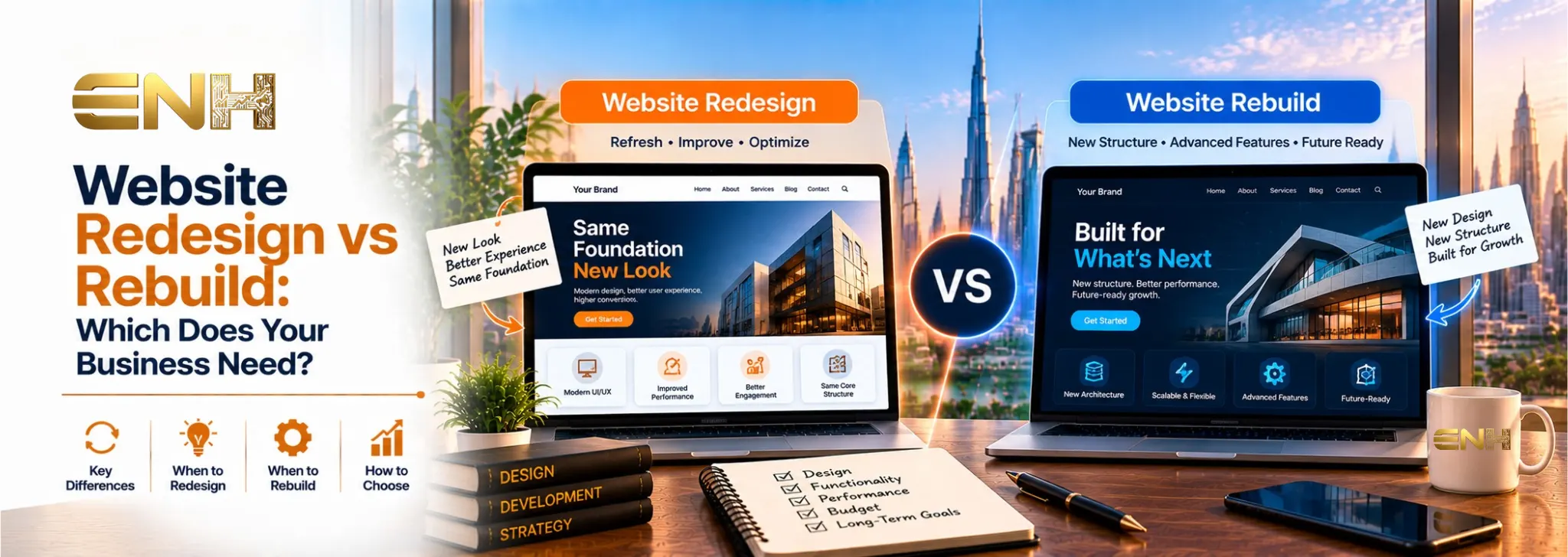
Sometimes, yes. If the foundation stays the same, a redesign can be faster. But not always. If the redesign involves moving to a new platform, migrating content, or major structural changes, it can take as long as a rebuild. So when people ask how long it takes to redesign a website, the website redesign timeline depends on how much really changes. We explain the difference in website redesign vs rebuild.
Website Development Timeline Checklist for Businesses
Before asking for a launch date, make sure you know:
Your website's main goal
The pages you need
The features you need
The CMS or platform you'll use
Any tools it must connect to
Who owns and supplies the content
Who approves the designs
How revisions will be handled
What testing is required
What has to be in place before launch
Having these answers ready makes your timeline far more predictable.
Frequently Asked Questions
Q. How long does it take to build a website?
A. It depends on size and complexity. Simple sites take the least time, larger or custom sites take longer, and online stores or web apps take the longest. Content, approvals, and testing also play a big part.
Q. How long does it take to build a small business website?
A. A website development timeline for a small business is usually shorter than for larger projects, since the page count and features are limited. Content readiness and how quickly you give feedback still affect the total time.
Q. How long does it take to build an e-commerce website?
A. How long it takes to build an ecommerce website depends on the number of products, checkout and payment setup, and integrations. It's usually longer than a standard business site because there's more to build and test.
Q. What causes website development delays?
A. Website development delays usually come from unclear requirements, changing scope, late content, slow approvals, repeated revisions, and unplanned integrations. Most of these are decision and content issues, not coding issues.
Q. Can a website be built faster if the content is ready?
A. Yes. Ready content removes one of the biggest causes of waiting. But it doesn't remove the time needed for design, development, and testing, so it speeds things up without making the project instant.
Final Thoughts
There's no universal website development timeline. How long it takes to build a website depends on scope, complexity, content readiness, integrations, approvals, and testing. The earlier these are planned, the more predictable the project timeline becomes.
If you're planning a project, see our web development services in Dubai or revisit our guide on what web development is.
About Vikas Kumar Singh
Vikas Kumar Singh is the Development Head at ENH Consulting with 9 years of experience in web development, mobile app development, and technology-driven business solutions. He focuses on building reliable, scalable, and user-focused digital products that support business objectives and long-term growth. At ENH Consulting, Vikas contributes technical expertise across website development, application development, development strategy, performance, scalability, and modern technology solutions. He works closely with project teams to ensure technical decisions are aligned with functionality, usability, and business requirements. Through his articles, Vikas shares practical insights on web technologies, application development, software solutions, and the technical considerations businesses should evaluate when planning digital projects.