IT Consulting vs Managed Services: What's the Difference?
 Yash Mittal
Table of Contents
- What Are Managed IT Services?
- What Is IT Consulting?
- IT Consulting vs Managed Services: Key Differences
- IT Consulting vs Managed Services: How Do Costs Differ?
- IT Consulting vs Managed Services: Which Does Your Business Need?
- Managed Services vs IT Consulting for Small Businesses
- Can You Use Both IT Consulting and Managed Services Together?
- Final Thoughts
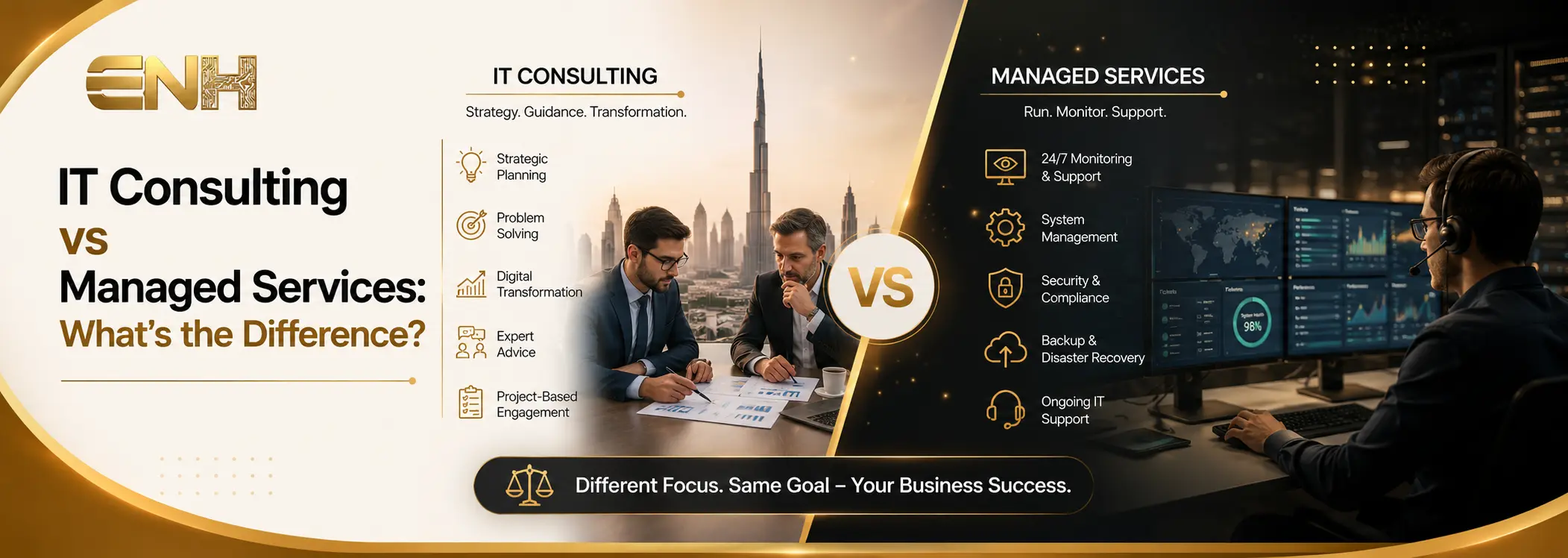
The main difference between IT consulting and managed services is the type and duration of support. IT consulting typically focuses on strategic advice, technology decisions, projects, and specific business challenges, while managed services provide ongoing monitoring, maintenance, support, and management of IT systems. Businesses may need one or both depending on whether the primary need is change, ongoing operations, or a combination of the two.
What Are Managed IT Services?
Managed services (delivered by a Managed Service Provider or MSP) means outsourcing the ongoing operation and maintenance of your IT systems to an external provider.
The MSP monitors your infrastructure, handles helpdesk support, manages backups, patches software, and keeps everything running day to day - typically on a monthly retainer.
The primary role of an MSP is ongoing operational responsibility - keeping systems available, secure, maintained, and supported. Some managed service providers also offer strategic advisory services, but continuous IT management remains the defining feature of the managed-services model.
What Is IT Consulting?
IT consulting provides strategic, technical, and project-based expertise to help businesses solve defined technology problems, make important technology decisions, plan transformations, or implement specific initiatives. Engagements may involve IT strategy, cloud migration, cybersecurity assessments, infrastructure modernization, system implementation, digital transformation, or project governance.
Unlike managed services, IT consulting is generally not centered on taking ongoing responsibility for day-to-day IT operations. Its primary role is to provide specialist expertise, strategic guidance, and project support around specific technology challenges or initiatives.
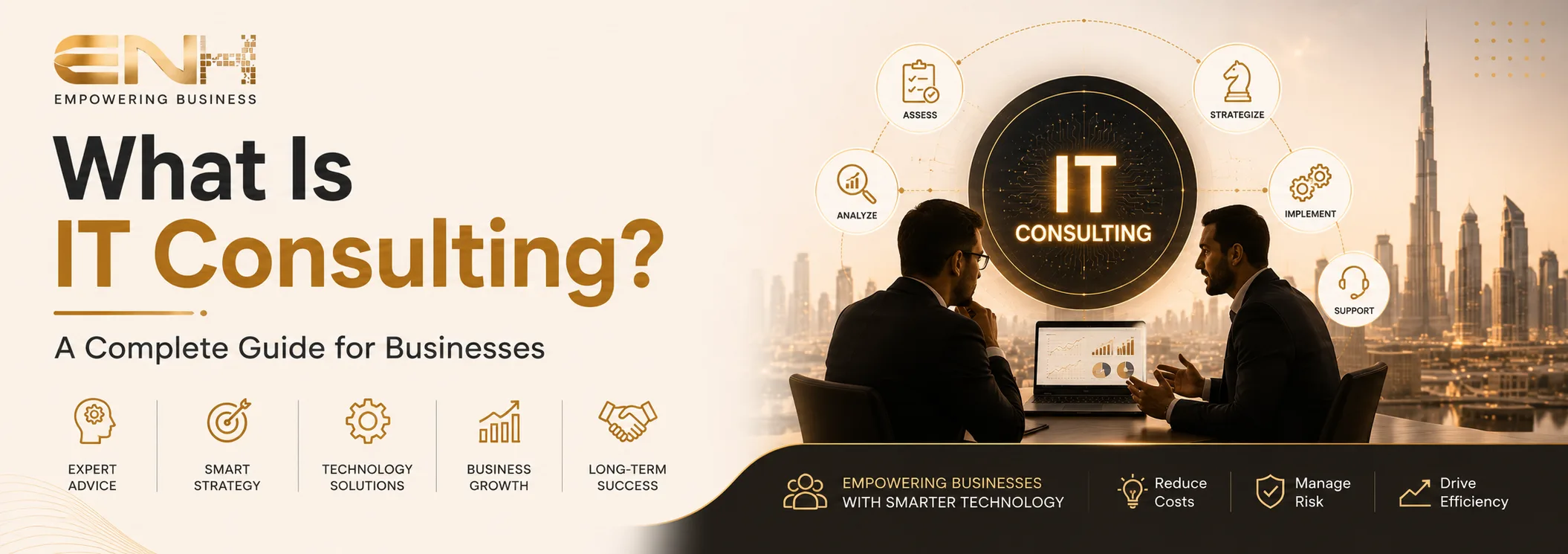
To understand the full scope of what this involves, our guide on what IT consulting is covers the complete picture from strategy through to implementation.
IT Consulting vs Managed Services: Key Differences
IT Consulting vs Managed Services: How Do Costs Differ?
The cost structure of IT consulting and managed services differs because each model is designed for a different type of engagement.
IT consulting is commonly priced around a defined project, specialist requirement, or advisory engagement. Depending on the scope, businesses may pay a fixed project fee, hourly or daily consulting rates, or an ongoing advisory retainer. Costs are generally influenced by the complexity of the project, required expertise, duration, and level of implementation support.
Managed services, by comparison, are typically structured around ongoing support and operational responsibility. Pricing may involve a monthly recurring fee, per-user or per-device charges, service tiers, or contracts based on defined service levels.
Neither model is inherently more cost-effective. Businesses should compare costs based on the problem being addressed, the expertise required, the duration of support, and the level of responsibility the provider will assume.
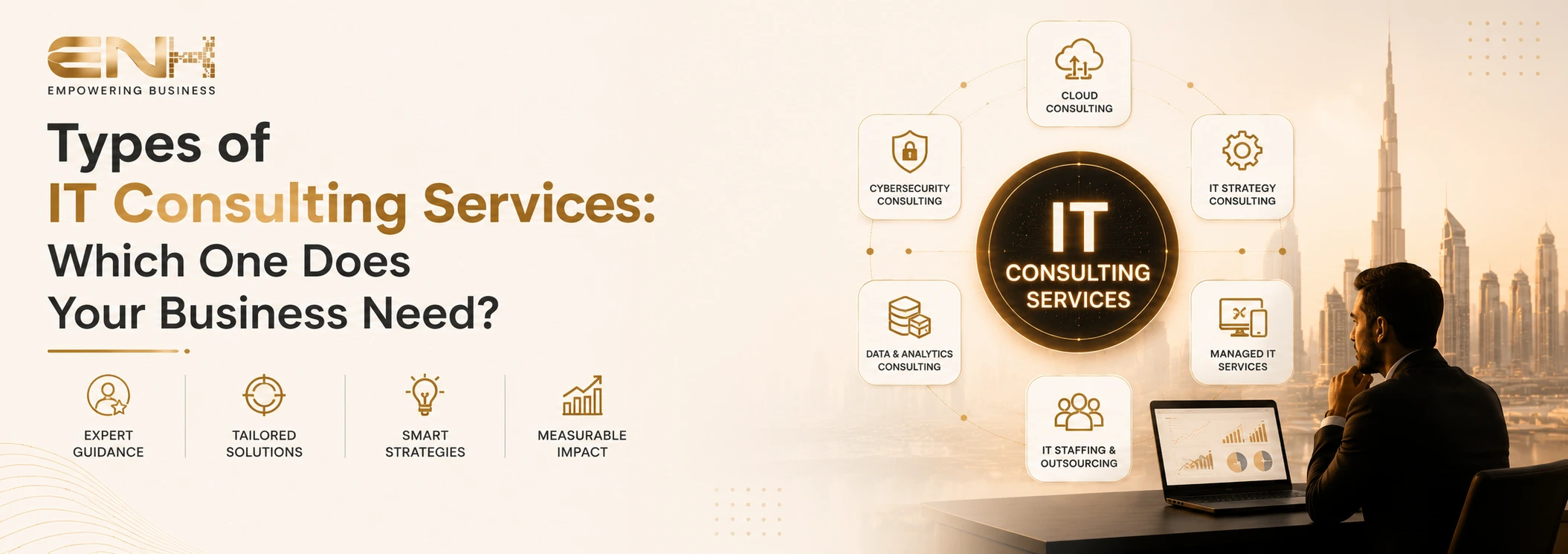
For businesses evaluating different advisory options, our guide to the types of IT consulting services explains how consulting engagements can vary depending on the technology challenge and business objective.
IT Consulting vs Managed Services: Which Does Your Business Need?
Choose IT Consulting When:
A major technology decision is approaching (new ERP, cloud migration, security overhaul)
Something keeps breaking and the root cause has not been identified
You need an IT strategy or technology roadmap
A large project needs expert oversight and governance
You want an objective second opinion before committing to a technology investment
Choose Managed Services When:
You need day-to-day IT operations covered without building an internal team
Helpdesk support and system monitoring are consuming too much internal time
You want predictable monthly IT costs
Basic IT maintenance is falling through the cracks
Consider Both When:
A consultant supports a major technology initiative or strategic change, while an MSP provides ongoing operational support during or after implementation.
This combined model can be useful when a business needs specialist guidance for a technology change followed by ongoing operational support.
Managed Services vs IT Consulting for Small Businesses
Small businesses often have limited internal IT resources, which can make the distinction between consulting and managed services especially important.
IT consulting may be appropriate when the business needs to make a significant technology decision, such as selecting new systems, moving to the cloud, improving cybersecurity, integrating platforms, or planning technology around future growth.
Managed services may be more appropriate when the primary challenge is operational, such as providing employee support, monitoring systems, maintaining backups, managing updates, or ensuring day-to-day IT reliability.
Some small businesses may need both. For example, a consultant might help design a cloud migration or technology roadmap, while a managed service provider subsequently supports the resulting environment.
The right choice therefore depends on the problem being solved - not simply the size of the business.
Can You Use Both IT Consulting and Managed Services Together?
Yes. IT consulting and managed services can complement each other when a business needs both strategic/project expertise and ongoing operational support.
An IT consultant typically supports strategic decisions, major projects, and complex technology challenges, while an MSP primarily handles ongoing operations, monitoring, maintenance, and support.
The key is clarity on who owns what. Clear responsibilities are important when both models are used. Defining ownership for strategy, implementation, support, security, monitoring, and escalation helps reduce duplicated work and gaps in accountability.
Final Thoughts
IT consulting vs managed services is not a competition. They solve different problems.
If your primary need is a specific technology decision, project, transformation, or complex problem requiring specialist expertise, IT consulting may be the better fit. If your primary need is reliable ongoing monitoring, maintenance, support, and day-to-day IT management, managed services may be more appropriate.
Not sure which approach fits your situation? ENH Consulting's IT consulting services in Dubai start by understanding your technology environment, business objectives, and specific challenges before recommending an appropriate path forward.
Frequently Asked Questions
Q. What is the difference between IT consulting and managed services?
A. IT consulting primarily provides strategic, technical, and project-based expertise for specific technology challenges or initiatives. Managed services primarily provide ongoing monitoring, maintenance, support, and management of IT systems. The main difference is therefore the nature and duration of responsibility rather than simply strategy versus execution.
Q. When should I use managed services instead of IT consulting?
A. Managed services may be appropriate when your primary need is ongoing IT support and operational management, such as help desk support, system monitoring, backups, patching, maintenance, or day-to-day infrastructure management. Some MSPs also provide strategic guidance, but continuous IT management remains the core of the managed-services model.
Q. Can I use both IT consulting and managed services?
A. Yes. IT consulting and managed services can complement each other when a business needs both specialist expertise for technology decisions or projects and ongoing operational support. The right combination depends on the organization's internal capabilities, technology environment, and specific requirements.
Q. When do I need an IT consultant vs MSP?
A. An IT consultant may be appropriate when you are facing a major technology decision, need a strategy or roadmap, cannot identify the root cause of a persistent problem, or require specialist oversight for a major project. An MSP may be more suitable when you need ongoing help desk support, monitoring, maintenance, backups, updates, or broader day-to-day IT management.
Q. Is IT consulting better than managed services?
A. Neither is inherently better because they address different needs. IT consulting is generally better suited to strategic decisions, specialist technology challenges, and defined projects, while managed services are designed primarily for ongoing IT operations, maintenance, monitoring, and support. The right choice depends on the type of responsibility your business needs external help with.
About Yash Mittal
Yash Mittal is the Founder of ENH Consulting with around 15 years of experience in business strategy, consulting, digital transformation, and organizational growth. He works closely with businesses to identify challenges, improve operations, evaluate growth opportunities, and build practical strategies aligned with long-term objectives. At ENH Consulting, Yash contributes insights across business consulting, AI consulting, business growth, process improvement, digital transformation, and strategic decision-making. His approach focuses on combining business understanding with practical, results-oriented solutions that help organizations improve performance and adapt to changing market conditions. Through his articles, Yash shares practical perspectives to help business owners, entrepreneurs, and decision-makers make more informed strategic decisions.