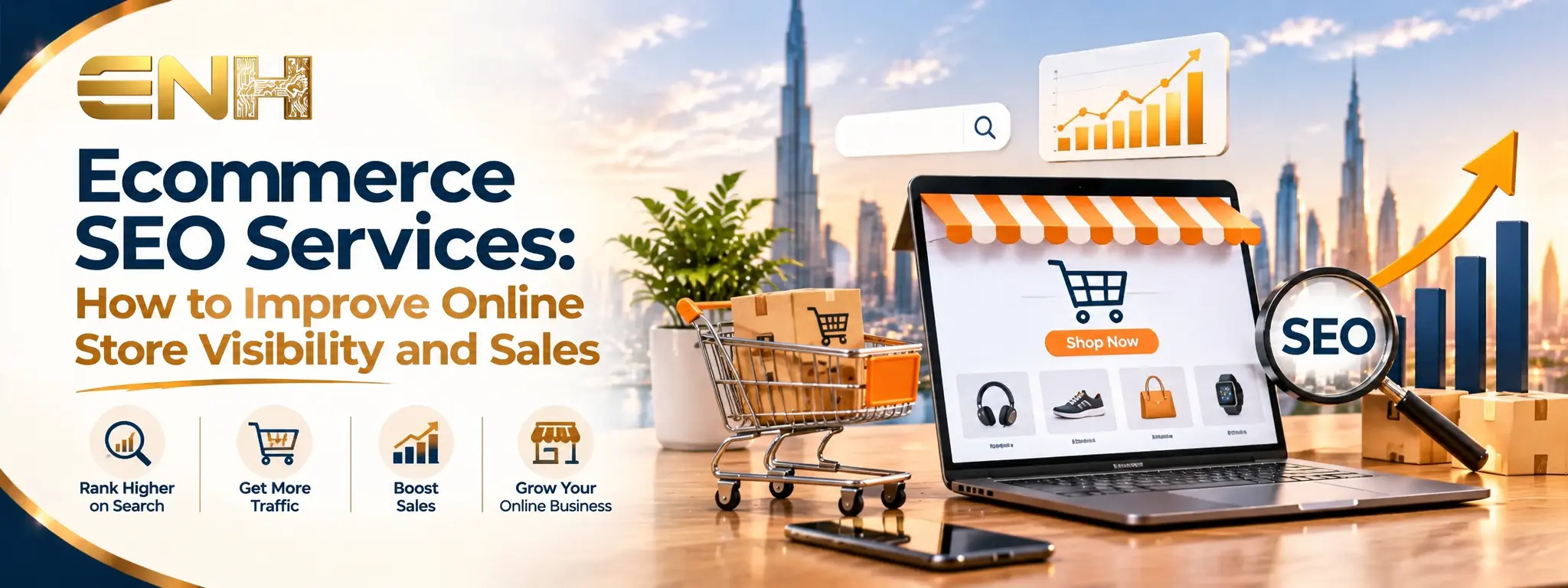
Ecommerce SEO Services: How to Improve Online Store Visibility and Sales
 Lucky Sippy
Table of Contents
- What Are Ecommerce SEO Services?
- Why Ecommerce SEO Matters for Online Businesses
- Key Ecommerce SEO Services Every Online Store Needs
- Common Ecommerce SEO Problems That Affect Rankings
- How to Build an Effective Ecommerce SEO Strategy
- How Ecommerce SEO Helps Increase Organic Sales
- How to Measure Ecommerce SEO Performance
An online store can have strong products and still stay invisible. If shoppers searching for what you sell never see your pages, you end up paying for every visit through ads. Ecommerce SEO services exist to fix that, helping product and category pages rank for the searches that lead to purchases. This guide covers what those services include, the problems that hold stores back, and how to build and measure a strategy.
What Are Ecommerce SEO Services?
Ecommerce SEO services are the optimization work that helps an online store appear in search results for relevant product searches. They cover keyword research, product and category page optimization, technical health, content and website structure.
How does this differ from general SEO? A service business might depend on a handful of pages. A store can have thousands of near-identical product pages, filtered URLs and changing stock. Ecommerce website SEO therefore deals more with scale, duplication and site structure, and the aim is visitors who are ready to buy, not just traffic.
Why Ecommerce SEO Matters for Online Businesses
For online retailers in Dubai and across the UAE, where shoppers compare options quickly, organic visibility matters because it:
Brings in visitors who are already searching for what you sell
Helps customers discover products they did not know to look for
Improves visibility for product and category pages
Reduces long-term reliance on paid advertising
Builds credibility when your pages are easy to find and genuinely useful
Supports steady store growth over time
SEO works best alongside the rest of your marketing. If you are mapping that out, this overview of what is digital marketing is a useful starting point.
Key Ecommerce SEO Services Every Online Store Needs
Ecommerce Keyword Research
Ecommerce keyword research starts with intent. "Running shoes" is broad, "women's trail running shoes" is more specific, and "buy trail running shoes Dubai" signals purchase intent. Map each keyword to one page: broad terms to category pages, specific ones to individual products.
Product Page Optimization
Product page SEO means unique titles, descriptions, headings and image alt text, plus the details shoppers need, such as size, material and delivery. Avoid pasting manufacturer descriptions. The same text sits on every competitor's site, which gives search engines little reason to prefer yours.
Your platform shapes what you can edit. For Shopify stores, Shopify website development choices affect how flexible product and category templates are.
Category Page SEO
Category pages often target the most valuable keywords. Give each a clear heading, a short introduction written for shoppers and logical product organization, rather than leaving a bare grid of products.
Technical SEO for Ecommerce Websites
Ecommerce technical SEO keeps search engines able to crawl and index the right pages. The essentials:
Fast loading and healthy Core Web Vitals
Mobile responsiveness
Crawlability, indexability and XML sitemaps
Canonical tags
Control over duplicate URLs created by faceted navigation
Many of these problems start with how the store was built, so ecommerce website development decisions matter.
Ecommerce Content Optimization
Buying guides, product comparisons and answers to pre-purchase questions reach shoppers earlier in their research. They also give you natural places to link to relevant products.
Internal Linking and Website Structure
Link categories to products, and guides to the products they discuss. Keep important pages within a few clicks of the homepage so crawl depth stays low and navigation stays logical.
Common Ecommerce SEO Problems That Affect Rankings
These issues quietly limit performance:
Duplicate product descriptions
Thin category pages with no useful content
Incorrect canonical tags
Broken internal links
Slow-loading product pages
Poor mobile experience
Filtered URLs indexed by mistake
Missing or invalid structured data
Together they waste crawling effort, blur which page should rank and frustrate shoppers, which can hurt both rankings and conversions.
How to Build an Effective Ecommerce SEO Strategy
Some stores manage this in-house. Others bring in specialists, such as SEO services in Dubai, for the audit and technical work. Either way, the sequence is similar:
Run an ecommerce SEO audit to find what is blocking visibility.
Research keywords by product and category intent.
Optimize product and category pages using that research.
Fix technical issues, starting with anything affecting indexing.
Develop useful content that answers shoppers' questions.
Strengthen internal linking between categories, products and guides.
Monitor and improve based on what the data shows.
An ecommerce SEO strategy works best when you fix problems in order of impact. A page that cannot be indexed matters more than a slightly better meta description.
How Ecommerce SEO Helps Increase Organic Sales
Search visibility helps sales when it reaches shoppers with purchase intent, makes products easy to find and sends them to pages that answer their questions. Clear product information builds trust and supports conversion.
Higher rankings do not automatically guarantee sales, though. Pricing, product quality, user experience and the checkout process also decide whether a visitor buys.
How to Measure Ecommerce SEO Performance
Track:
Organic clicks and impressions
Keyword visibility
Product and category page performance
Organic conversion rate
Revenue from organic traffic
Use Google Search Console for search performance and Google Analytics 4 for conversions and revenue. Rankings are a useful diagnostic, but revenue is the result that matters.
Frequently Asked Questions
Q. What are ecommerce SEO services?
A. Ecommerce SEO services are optimization solutions designed to improve an online store's visibility in search engine results. They include keyword research, product and category page optimization, technical SEO, content improvements, internal linking and website structure. These activities help search engines understand your products and make it easier for potential customers to discover your store.
Q. How does SEO help an ecommerce website increase sales?
A. SEO helps ecommerce websites attract people who are actively searching for specific products or solutions. By optimizing product pages, category pages and website content, businesses can reach relevant audiences through organic search. Better visibility can bring qualified visitors, but product quality, competitive pricing, website experience and a smooth checkout process also influence sales.
Q. How long does ecommerce SEO take to show results?
A. Ecommerce SEO does not produce immediate results because search engines need time to crawl, understand and evaluate website improvements. Some technical fixes may show early improvements, while stronger ranking and traffic growth can take several months. The timeline depends on website condition, competition, content quality, indexing and the consistency of optimization efforts.
Q. What are the most important ecommerce SEO factors?
A. Important ecommerce SEO factors include relevant keyword targeting, unique product descriptions, well-optimized category pages, mobile responsiveness, website speed and proper indexing. A logical website structure and relevant internal links also help search engines discover important pages. Additionally, structured data, useful content and regular performance monitoring support a stronger ecommerce SEO strategy.
Q. Is ecommerce SEO better than paid advertising?
A. Ecommerce SEO and paid advertising serve different purposes, so neither is automatically better for every online store. Paid advertising can generate traffic quickly but requires continuous spending. SEO takes longer to build visibility but can attract organic visitors over time. Many ecommerce businesses combine both channels to generate immediate traffic and support sustainable growth.
Final Thoughts
Ecommerce SEO is a long-term investment. Focus on technical performance, useful product content, search intent and steady optimization instead of chasing quick ranking wins. ENH Consulting works as a business and technology consulting partner, helping online businesses plan the systems and strategy behind their growth.
About Lucky Sippy
Lucky Sippy is a Digital Marketing Specialist at ENH Consulting with 5 years of experience in digital marketing. He focuses on helping businesses strengthen online visibility, attract relevant audiences, and improve marketing performance across digital channels. His areas of expertise include search engine optimization, paid advertising, social media marketing, content marketing, conversion optimization, online reputation management, and digital marketing strategy. At ENH Consulting, Lucky contributes to developing and optimizing strategies based on search behavior, audience needs, competition, and measurable business objectives. Through his articles, Lucky shares practical insights on SEO, PPC, social media, content, and digital marketing strategies that businesses can use to improve visibility, traffic, engagement, and conversions.