What Is Digital Marketing? A Complete Guide for Businesses
 Lucky Sippy
Table of Contents
- What Is Digital Marketing?
- How Does Digital Marketing Work?
- Why Is Digital Marketing Important for Businesses?
- What Are the Main Types of Digital Marketing?
- Digital Marketing Examples in Business
- Digital Marketing vs Traditional Marketing: What's the Difference?
- How to Create a Digital Marketing Strategy
- How Do You Choose the Right Digital Marketing Channels?
- Organic vs Paid Digital Marketing
- How Much Should Businesses Spend on Digital Marketing?
- How Long Does Digital Marketing Take to Show Results?
- How Do You Measure Digital Marketing Success?
- What Is a Digital Marketing Funnel?
- Why Does Digital Marketing Fail to Generate Leads?
- Digital Marketing for Small Businesses
- Digital Marketing for Businesses in Dubai and the UAE
- How to Get Started With Digital Marketing
- Final Thoughts
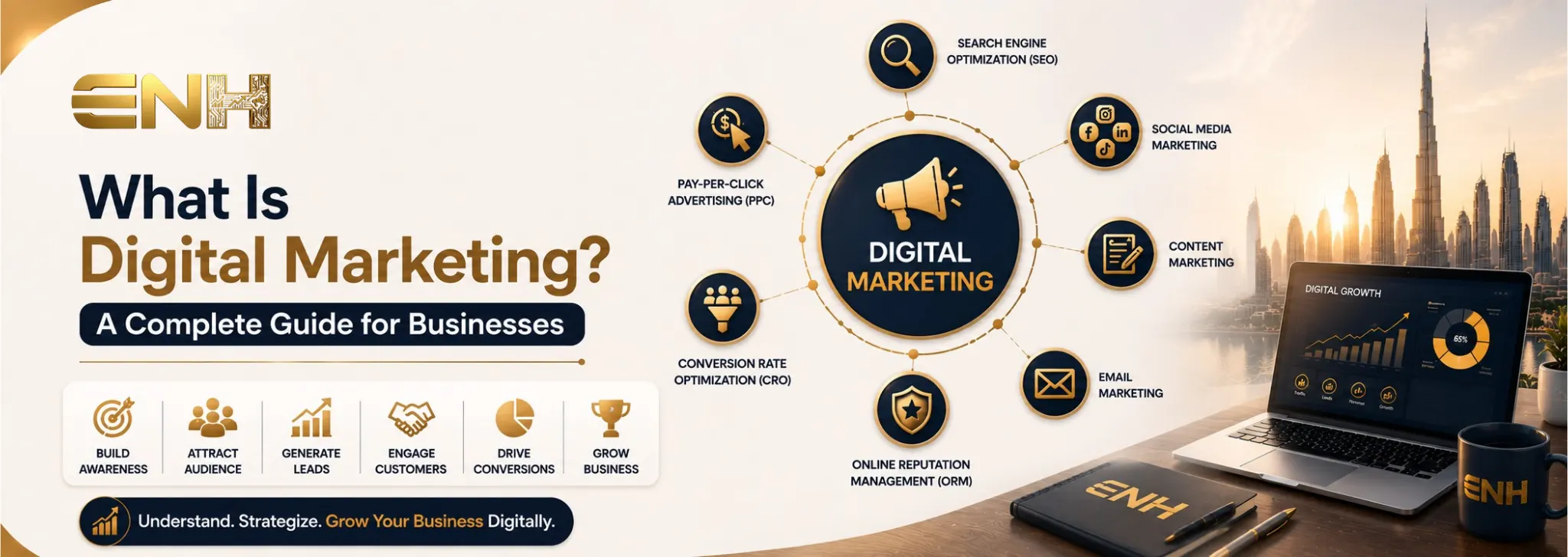
Digital marketing is how businesses promote products and services using online channels - search engines, social media, email, paid ads and websites - instead of relying solely on print, TV or radio. It includes SEO, PPC advertising, social media marketing, content marketing, email marketing, online reputation management and conversion rate optimization, all working together to build awareness, generate leads, drive sales and keep customers coming back. For most businesses today, digital marketing meaning isn't one tactic - it's a connected set of channels aimed at the same commercial goals.
In short: digital marketing is the practice of promoting a business online through channels such as search, social media, email and paid advertising, with the goal of reaching the right audience, generating measurable leads or sales, and building lasting customer relationships.
What Is Digital Marketing?
The digital marketing definition sounds simple on paper - using digital channels to market a business - but the gap between having an online presence and actually doing digital marketing is bigger than most people assume.
A business with a website and a dormant Instagram account has an online presence. A business using SEO to rank for the terms its customers search, running paid ads that target the right buyers, publishing content that answers real questions, and tracking which channels actually produce revenue - that business is doing digital marketing. The difference is intent and measurement. Digital marketing meaning, in a business context, always comes back to using digital channels deliberately, with a goal and a way to measure whether that goal was met.
Businesses that need specialist support across multiple channels may use professional digital marketing services in Dubai to bring SEO, paid advertising, social media, content, and conversion efforts under a more coordinated strategy.
How Does Digital Marketing Work?
The digital marketing process is rarely a straight line, but most successful campaigns move through the same broad stages.
1. Understand the Target Audience
Before any channel gets chosen, a business needs to know who it's actually trying to reach - their problems, where they spend time online, and what influences their decisions. Skipping this step can lead to poor targeting, inefficient channel selection, and campaigns that struggle to reach the right audience.
2. Set Marketing Goals
Awareness, leads, sales, retention - each goal points toward different channels and different metrics. A business chasing leads shouldn't be judged on impressions.
3. Select the Right Digital Marketing Channels
Not every business needs every channel. The right mix depends on the audience, the buying cycle and the budget available, which is covered in more detail further down.
4. Create Content and Campaigns
This is where strategy becomes something visible - landing pages, ad creative, blog content, email sequences and social posts, all built around the goals set earlier.
5. Convert Visitors Into Leads or Customers
Traffic alone doesn't pay the bills. Clear calls to action, well-built landing pages and a straightforward path to purchase or contact are what turn visitors into pipeline.
6. Measure Performance
Every channel produces data - traffic, clicks, conversions, cost per lead. This is what separates digital marketing from traditional marketing: almost everything can be tracked.
7. Optimize and Scale
What's working gets more budget and more attention. What isn't gets fixed or cut. This cycle repeats continuously rather than happening once a year.
Why Is Digital Marketing Important for Businesses?
The importance of digital marketing comes down to a handful of practical advantages over offline-only approaches.
Digital channels let a business reach a specific audience rather than a general one - targeting by interest, location, behavior or search intent instead of hoping the right people happen to see a billboard. Performance is measurable in real time, so spend can be adjusted based on what's actually working rather than waiting until a campaign has already run its course. Budgets are more flexible too: a business can start small, test an approach and scale up only once something proves itself.
Beyond that, digital marketing supports personalization at a level traditional media can't match, keeps customers engaged through ongoing touchpoints rather than one-off ads, and scales alongside the business rather than requiring a completely different approach at every stage of growth. None of this means digital marketing guarantees results - it doesn't - but it does give a business far more visibility into what's working and far more room to adjust than most offline channels allow.
What Are the Main Types of Digital Marketing?
Most businesses combine several types of digital marketing rather than relying on just one channel.
Search Engine Optimization (SEO)
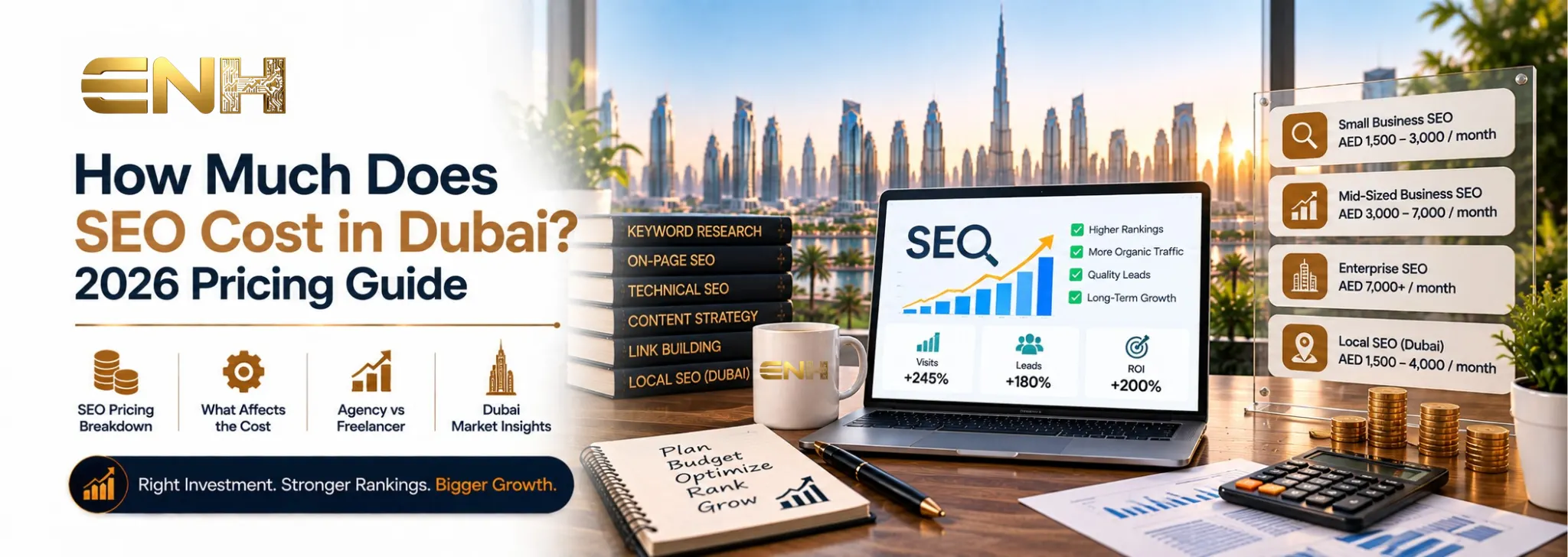
SEO in digital marketing means improving a website so it ranks higher in organic (unpaid) search results for the terms a business's customers actually search. That covers technical factors like site speed and structure, content that answers real search queries, and building the kind of authority search engines associate with trustworthy sites. SEO tends to be slower to show results than paid channels, but the traffic it generates doesn't stop the moment a budget runs out - which is what makes it one of the more durable digital marketing channels over time. Businesses building this out often work with SEO services in Dubai to handle the technical and content work properly.
Pay-Per-Click Advertising (PPC)
PPC in digital marketing refers to paid ads - most commonly Google Ads - where a business pays each time someone clicks their ad rather than paying for placement itself. PPC can provide businesses with immediate paid visibility once campaigns are approved and launched, making it useful when faster market visibility is required. The trade-off is that traffic stops the moment spending stops. Managing bids, targeting and ad quality well is what separates efficient PPC from wasted budget, which is why many businesses lean on PPC services in Dubai to run campaigns.
Social Media Marketing
Social media marketing covers both organic posting and paid social advertising across platforms like Instagram, LinkedIn, Facebook and TikTok. Organic content builds awareness and engagement over time; paid social lets a business target specific audiences with ads that show up in someone's feed rather than requiring them to search first. The right platform mix depends heavily on where a business's actual audience spends time - a B2B software company and a local restaurant have almost nothing in common here. SMM services in Dubai can help figure out which platforms are actually worth the effort.
Content Marketing
Content marketing means creating useful material - articles, guides, videos, case studies - that attracts potential customers by answering questions they already have, rather than interrupting them with an ad. Done well, it moves people through their decision journey: educational content early on, more product-focused content as they get closer to a decision. It also feeds SEO, since search engines need content to rank in the first place. Building this out consistently, rather than in occasional bursts, is usually what separates content marketing that compounds from content marketing that stalls.
Email Marketing
Email marketing is one of the more underrated digital marketing channels because it reaches people who've already shown interest - a list a business actually owns, rather than one rented from a platform's algorithm. It's used for lead nurturing, retention, promotions and automated sequences that trigger based on customer behavior, like a welcome series or a cart-abandonment reminder. Because email reaches people who have already interacted with a business, it can be an efficient channel for lead nurturing, retention, repeat purchases, and customer communication.
Online Reputation Management (ORM)
ORM covers monitoring and actively shaping how a business is perceived online - reviews, mentions, search results tied to the brand name, and how it responds when something goes wrong publicly. A strong reputation makes every other channel work better, since people research a business before buying from it regardless of which channel brought them there in the first place. Managing this proactively, rather than reacting only when a problem surfaces, is usually what keeps a brand's reputation from becoming a liability.
Conversion Rate Optimization (CRO)
Getting traffic to a website is only half the job - CRO is about improving how much of that traffic actually converts into leads or sales. That means testing landing pages, simplifying forms, clarifying calls to action and removing friction from the path to purchase. A business can double its traffic and see no revenue change if the site itself isn't converting, which is exactly why CRO services in Dubai matter as much as the channels driving people there.
Digital Marketing Examples in Business
Abstract definitions only go so far. Here's what digital marketing actually looks like in practice.
Local Business Generating Leads Through SEO
A plumbing company optimizes its Google Business Profile and website for local search terms like "emergency plumber [city]." Within a few months, it starts showing up in local search results and the map pack, generating calls without paying per click.
E-Commerce Brand Using PPC and Retargeting
An online retailer runs Google Shopping ads to capture people actively searching for its products, then uses retargeting ads to bring back visitors who browsed but didn't buy - often recovering a meaningful share of that lost traffic.
B2B Company Generating Leads Through LinkedIn and Content
A software company publishes in-depth guides on problems its buyers face, then promotes that content on LinkedIn to reach decision-makers directly, using gated resources to capture contact details from interested readers.
Online Store Using Email to Recover Abandoned Carts
An e-commerce brand sets up an automated email sequence that triggers when a shopper adds items to their cart but doesn't check out, often recovering a portion of sales that would otherwise be lost entirely.
Business Improving Landing Pages to Increase Conversions
A service business notices its ads are getting clicks but few inquiries. After testing a simpler landing page with a clearer offer and shorter form, conversion rates improve - without spending a cent more on traffic.
Digital Marketing vs Traditional Marketing: What's the Difference?
The core difference between digital and traditional marketing comes down to targeting, measurement and flexibility.
Traditional channels like TV, print and billboards still have a place, especially for broad brand awareness, but they can't be adjusted mid-campaign or measured with anywhere near the same precision. A separate guide breaks this comparison down in more detail.
How to Create a Digital Marketing Strategy
A digital marketing strategy is what ties individual campaigns together instead of running channels in isolation. In broad terms, it means defining clear goals, understanding the audience, analyzing current performance, choosing the right channels, allocating budget accordingly, building out campaigns and content, tracking the KPIs that actually matter, and adjusting based on what the data shows. A dedicated guide covers how to build this process step by step.
How Do You Choose the Right Digital Marketing Channels?
Not every business needs every channel - and trying to run all of them at once, badly, tends to produce worse results than doing two or three well.
The right channels depend on who the audience is, whether the business sells B2B or B2C, how long the buying cycle typically runs, what budget is available, whether the goal is short-term leads or long-term brand building, how competitive the space already is, and what assets the business already has to work with. A B2B company with a long sales cycle and a LinkedIn-heavy audience needs a very different channel mix than a DTC brand selling impulse purchases on Instagram. A dedicated guide walks through this decision in more depth, and a related comparison looks specifically at SEO versus PPC versus social media for businesses weighing where to invest first.
Organic vs Paid Digital Marketing
Digital marketing splits broadly into organic and paid efforts. Organic includes SEO, organic social media and content marketing - channels that build results over time without paying for placement. Paid includes Google Ads, paid social and display or retargeting - channels that buy visibility immediately.
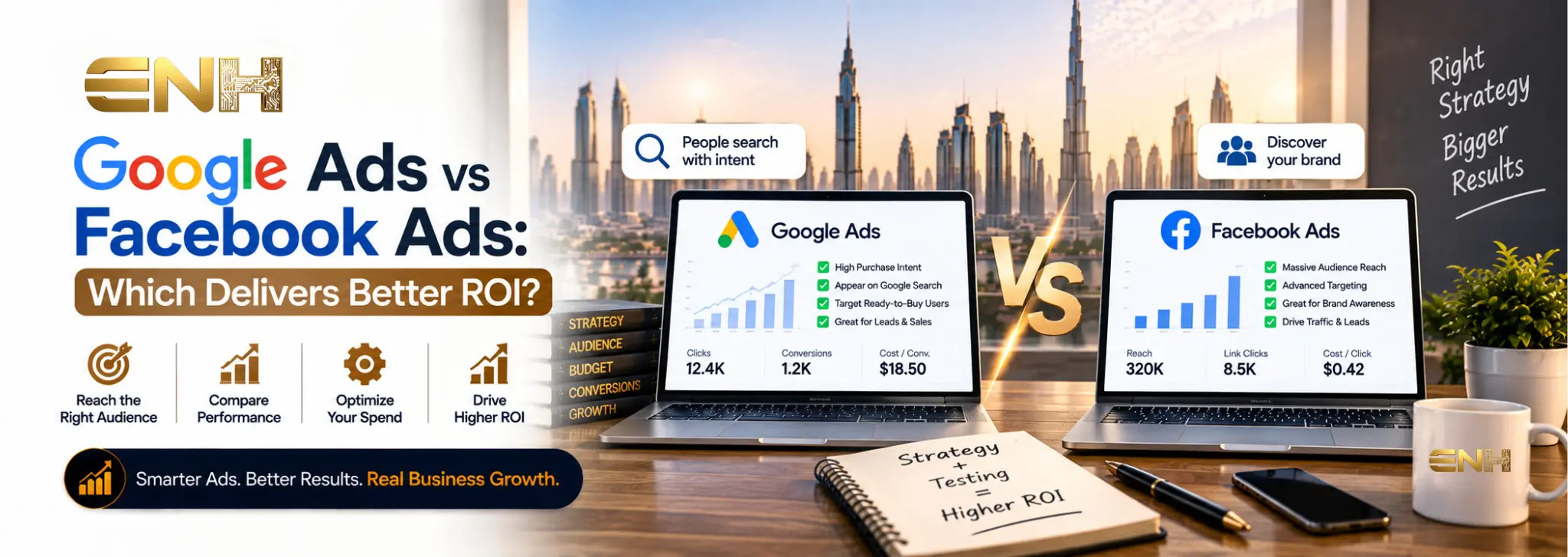
Most businesses use both rather than treating them as competing approaches. Paid channels can generate leads while organic channels are still building momentum, and organic channels reduce long-term reliance on ad spend once they mature. A dedicated comparison looks at organic versus paid marketing in more depth, and a related guide breaks down SEO vs PPC specifically.
How Much Should Businesses Spend on Digital Marketing?
There's no single percentage that applies to every business, despite how often that question gets asked. The budget depends on current revenue and growth targets, the industry and how competitive it is, which channels are actually relevant, customer acquisition economics (what a customer is worth versus what it costs to acquire one), geography, and how strong the business's existing organic presence already is.
A business in a highly competitive market with no existing SEO foundation will typically need a larger initial investment than one with years of organic content already ranking. A dedicated guide breaks this down by business size and goal, and for businesses operating specifically in competitive markets like Dubai, local competition adds another layer to that budget conversation. Businesses targeting the Dubai market can also explore our guide on digital marketing budget in Dubai for a more detailed look at costs, goals, and investment considerations.
How Long Does Digital Marketing Take to Show Results?
Timelines vary significantly by channel, and anyone promising exact results on a fixed schedule should be treated with some skepticism.
SEO is generally the slowest to show meaningful results, often taking several months to build momentum, but it compounds over time. PPC can generate visibility almost immediately once campaigns go live. Social media results depend heavily on whether the approach is organic, paid or both. Content marketing compounds similarly to SEO, since older content keeps generating traffic long after publication. Email marketing depends on list size and how mature the campaigns already are, and CRO improvements depend on how much traffic and data is available to test against. A dedicated guide goes deeper into what to expect from each channel.
How Do You Measure Digital Marketing Success?
Digital marketing metrics and KPIs should tie back to the goal a channel was meant to achieve, not just activity for its own sake.
Common measures include organic traffic and rankings, lead volume, conversion rate, cost per lead (CPL), customer acquisition cost (CAC), click-through rate (CTR), return on ad spend (ROAS), customer lifetime value and, ultimately, revenue and overall ROI. A campaign generating plenty of clicks but no leads isn't succeeding, regardless of how good the traffic numbers look. A dedicated guide covers how to calculate digital marketing ROI in more detail, including the specific formulas involved.
What Is a Digital Marketing Funnel?
A digital marketing funnel maps how a potential customer moves from first hearing about a business to becoming a paying, returning one - typically broken into awareness, consideration, conversion and retention stages.
Different channels tend to support different stages: SEO and content marketing usually drive discovery and awareness, social media builds awareness and engagement, PPC accelerates acquisition once someone is closer to a decision, email nurtures leads and retains existing customers, and CRO improves how well the conversion stage itself performs. Understanding which channel is doing which job makes it much easier to diagnose where a funnel is actually leaking. A dedicated guide walks through how to build a funnel that generates consistent leads.
Why Does Digital Marketing Fail to Generate Leads?
Digital marketing that isn't generating leads is usually failing for one of a handful of predictable reasons, not because "digital marketing doesn't work."
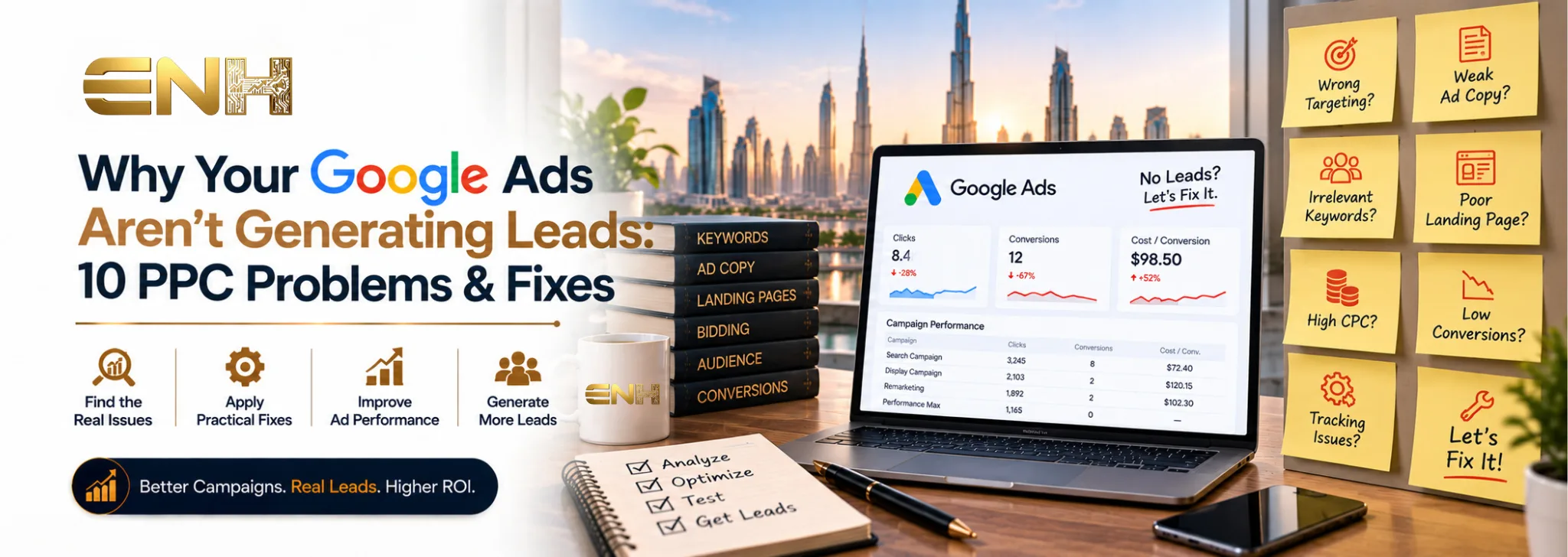
Common culprits include targeting the wrong audience, choosing channels that don't match where that audience actually spends time, weak or unclear landing pages, messaging that doesn't speak to a real problem, no clear call to action, insufficient tracking to know what's actually happening, focusing on traffic volume instead of conversions, and running SEO, PPC, content and social as disconnected efforts instead of a coordinated strategy. A dedicated guide covers the 10 most common problems in more detail, and a related article looks specifically at why a site might be getting traffic with no leads to show for it - which often comes down to landing page and offer clarity rather than the channel itself.
When traffic is reaching the website but visitors are not converting, the problem may be the landing page rather than the acquisition channel. Improving messaging, page structure, calls to action, forms, and user experience can help reduce this conversion gap.
Digital Marketing for Small Businesses
Small businesses rarely have the budget or team to compete across every digital marketing channel at once, and trying to do so usually spreads resources too thin to generate meaningful results anywhere.
A more workable approach starts with budget, then works outward: understand who the audience actually is, what intent looks like at the point they're searching or scrolling, which one or two channels best match that intent, and how results will actually be measured. A local service business, for instance, often gets more from local SEO and Google Business Profile optimization than from a broad social media presence it doesn't have time to maintain well. A dedicated guide breaks down where small businesses should invest first.
Digital Marketing for Businesses in Dubai and the UAE
Digital marketing in Dubai and the wider UAE comes with its own set of considerations that a generic global playbook doesn't fully account for.
Dubai and the wider UAE have a competitive digital environment and a diverse, multilingual audience. Businesses may need to consider language, location, audience demographics, industry competition, customer behavior, and local search patterns when selecting digital marketing channels. A strategy that works in one market may therefore need to be adapted for UAE audiences rather than replicated without localization. Related guides cover what UAE SMEs should prioritize in their digital marketing strategy and how Dubai-specific budgets tend to compare to global benchmarks. Businesses building a presence in this market can also work with digital marketing services in Dubai that already understand the local landscape.
How to Get Started With Digital Marketing
Moving from understanding digital marketing to actually doing it doesn't need to be complicated.
Define Your Business Goals
Start with what the business actually needs - more leads, more sales, more awareness - since that decision shapes everything after it.
Understand Your Audience
Know who's actually being targeted before choosing where to spend time or budget.
Identify the Best Channels
Match channels to the audience and goals rather than picking what feels trendy or what a competitor happens to be doing.
Set a Realistic Budget
Decide what's actually available to spend and how it should be split across the channels chosen.
Create a Measurement Framework
Know in advance what success will look like and how it will be tracked, rather than figuring that out after a campaign has already launched.
Test, Learn and Optimize
Treat the first version of any campaign as a starting point, not a finished product, and expect to adjust based on real results.
Businesses that need specialist support planning, managing, and optimizing their digital channels can explore professional digital marketing services for a more coordinated approach to strategy and execution.
Final Thoughts
Digital marketing isn't one channel or one campaign. It's a connected system of channels, content, technology, data and ongoing optimization, all built around specific business objectives. SEO, PPC, social media, content, email, reputation management and CRO each play a different role, and most businesses need some combination of them rather than just one.
The right combination always comes back to the same variables: who the audience is, what the business is trying to achieve, what budget is realistic, and how competitive the market actually is. There's no universal formula - just a process for figuring out what fits.
Frequently Asked Questions
Q. What is digital marketing in simple words?
A. Digital marketing is promoting a business online using channels like search engines, social media, email and paid ads, rather than relying solely on TV, print or radio. It aims to reach the right audience, build brand awareness, generate leads or sales, and measure results in real time - something traditional marketing struggles to do.
Q. What are the main types of digital marketing?
A. The main types are SEO, PPC advertising, social media marketing, content marketing, email marketing, online reputation management (ORM) and conversion rate optimization (CRO). Each targets a different stage of the customer journey, from building visibility and awareness to generating leads and converting visitors into paying customers. Most businesses combine several types rather than relying on just one.
Q. How does digital marketing work?
A. Digital marketing works by identifying a target audience, setting clear goals, and selecting the right channels - SEO, PPC, social media, content or email - to reach that audience. Campaigns are then created, launched, and tracked using real data, with performance measured against KPIs and continuously optimized to improve results over time.
Q. Why is digital marketing important for businesses?
A. Digital marketing is important because it lets businesses target specific audiences precisely, measure results in real time, and adjust campaigns based on actual data rather than guesswork. It also offers flexible budgets that scale with the business, personalized messaging, and broader reach - advantages traditional advertising like TV or print generally can't match.
Q. What are some examples of digital marketing?
A. Examples of digital marketing include a local business ranking on Google through SEO, an online store running retargeting ads after a site visit, a B2B company generating leads through LinkedIn content, a brand using email to recover abandoned carts, and a business optimizing landing pages to increase conversions from existing traffic.
Q. What is the difference between digital and traditional marketing?
A. Digital marketing uses online channels with precise targeting, real-time measurement, and mid-campaign flexibility to adjust based on performance. Traditional marketing - TV, print, radio, billboards - reaches a broader, less specific audience, is harder to measure directly, and generally can't be changed once a campaign has already launched, unlike digital campaigns.
Q. How long does digital marketing take to work?
A. Results vary significantly by channel. PPC can generate visibility almost immediately once campaigns launch, while SEO and content marketing typically take several months to build momentum but compound over time. Social media, email and CRO results depend on existing audience size, campaign maturity and available traffic data - so no channel offers a fixed timeline.
Q. How much should a business spend on digital marketing?
A. There's no fixed percentage that applies to every business - spend depends on revenue, growth targets, industry competition, which channels matter most, customer acquisition economics, geography, and how established the business's organic presence already is. A competitive market with little existing SEO usually needs a bigger initial budget.
Q. Which digital marketing channel is best for a business?
A. There's no single best channel - the right mix depends on the audience, the buying cycle, available budget, and the business's specific goals, whether that's brand awareness, immediate leads, or long-term growth. Most businesses get the best results from combining two or three complementary channels rather than relying on just one.
Q. Is digital marketing suitable for small businesses?
A. Yes - digital marketing works well for small businesses, though budgets and teams are usually more limited than at larger companies. Small businesses generally get better results by prioritizing one or two channels that closely match their audience and budget, rather than trying to compete across every channel at once.
About Lucky Sippy
Lucky Sippy is a Digital Marketing Specialist at ENH Consulting with 5 years of experience in digital marketing. He focuses on helping businesses strengthen online visibility, attract relevant audiences, and improve marketing performance across digital channels. His areas of expertise include search engine optimization, paid advertising, social media marketing, content marketing, conversion optimization, online reputation management, and digital marketing strategy. At ENH Consulting, Lucky contributes to developing and optimizing strategies based on search behavior, audience needs, competition, and measurable business objectives. Through his articles, Lucky shares practical insights on SEO, PPC, social media, content, and digital marketing strategies that businesses can use to improve visibility, traffic, engagement, and conversions.