Top Business Challenges in the UAE and How to Overcome Them
 Yash Mittal
Table of Contents
The UAE offers significant advantages for businesses - strong economic fundamentals, international connectivity, a well-established business ecosystem, and access to regional markets across the GCC and beyond.
Yet operating in a competitive, internationally connected environment also means companies must continuously improve their strategy, operations, financial management, technology, and workforce capabilities. Startups, SMEs, and established companies all face common challenges - around competition, costs, talent, operations, technology, and sustainable growth - that require active management rather than reactive responses.
This article covers the most common business challenges faced by companies in the UAE and practical ways to address them.
What Are the Biggest Business Challenges in the UAE?
Challenges vary depending on company size, industry, growth stage, and location - but several problems consistently affect businesses operating across the UAE regardless of sector.
1. Intense Market Competition
The UAE attracts businesses from across the world. Local companies compete with regional players and international brands that have established customer bases and significant marketing resources.
Differentiation becomes critical - and difficult. Businesses that cannot articulate a clear competitive advantage tend to compete on price, which compresses margins and limits long-term sustainability.
How to address it: Invest in understanding your specific customer segment, conduct honest competitor analysis, and define positioning that reflects genuine differentiation. A clear business growth strategy should identify which markets and customer segments the business can realistically win and focus resources accordingly. For businesses unsure where to start, understanding how business consulting helps companies improve strategy and performance can provide useful context before committing to any direction.
2. Managing Operating Costs and Cash Flow
Cash flow management is consistently among the most pressing challenges for growing UAE businesses. Operating costs include commercial rent, licensing, visa and employment expenses, and the cost of attracting and retaining skilled staff. UAE businesses also need to account for their particular operating structure - staffing levels, premises, licensing requirements, expansion plans, and other recurring costs - when building realistic cash flow forecasts.
Cash flow pressure is particularly acute during growth phases when investment precedes revenue. Many businesses experience strong top-line growth while simultaneously struggling with visibility into their actual liquidity position.
How to address it: Build a rolling cash flow forecast and review it regularly. Track unit economics - understand the profitability of each revenue stream. Prioritize profitable activity over revenue volume and treat financial visibility as a non-negotiable management discipline.
3. Attracting and Retaining the Right Talent
Competition for skilled talent can make employee attraction and retention a significant challenge for growing UAE businesses. Businesses often find themselves repeatedly hiring for the same roles, absorbing the cost and disruption of attrition without addressing the underlying causes.
How to address it: Define roles clearly before hiring. Build structured onboarding, performance management, and development pathways - not just for leadership but across the team. Understand why people leave through honest exit conversations and act on the patterns before they become structural problems.
4. Maintaining Operational Efficiency While Growing
Processes that work for a team of ten rarely work for a team of fifty. As businesses scale, informal coordination breaks down, manual workflows become bottlenecks, and errors that were manageable at small volume become costly at larger scale.
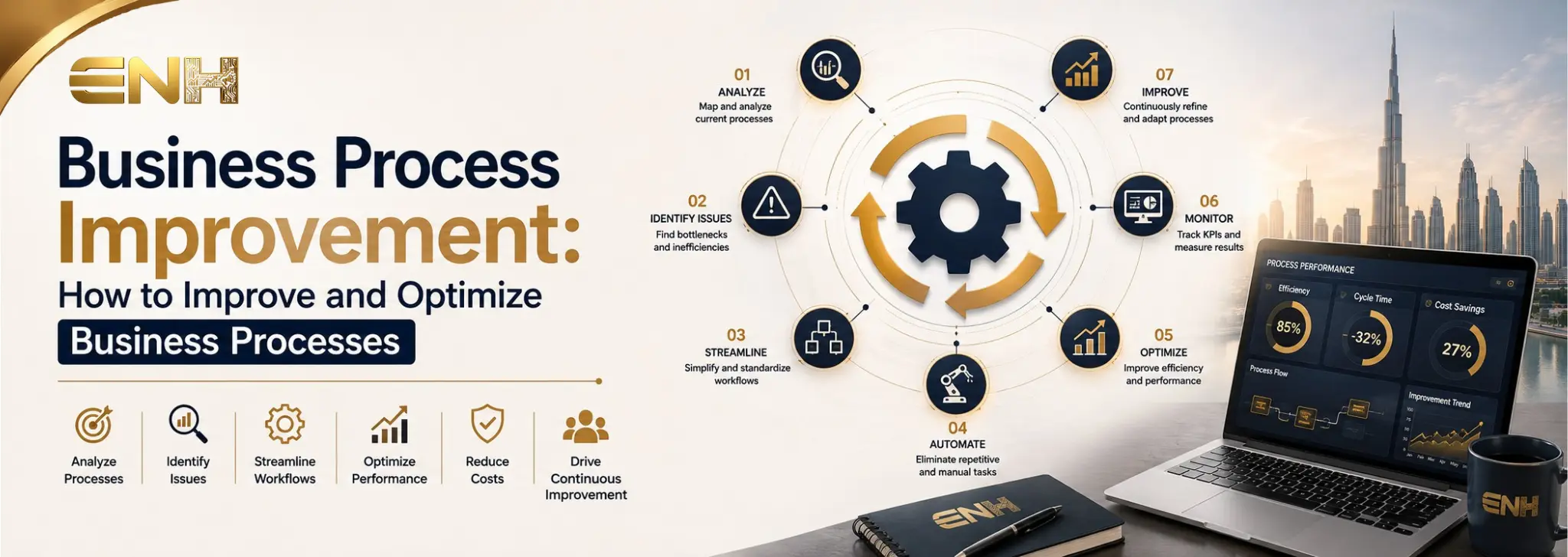
How to address it: Document core processes before you scale, not after. Introduce automation for high-volume, rule-based tasks. Define clear ownership for cross-departmental handoffs. Measure operational efficiency at regular intervals so degradation is caught early.
When recurring operational problems continue despite internal improvements, it may be worth assessing when a business should hire a consultant rather than continuing to treat the same symptoms internally.
5. Keeping Up With Digital Transformation
Technology adoption pressure is real - but adopting the wrong technology for the wrong reasons creates its own problems. Many businesses have invested in platforms that are underused, poorly integrated, or misaligned with how the business actually operates.
How to address it: Define the business problem before evaluating technology. Digital transformation should start with operational objectives and specific gaps - not with individual tools or competitor behavior. Technology should follow strategy, not lead it.
6. Navigating Regulatory and Compliance Requirements
Businesses operating in the UAE need to understand the regulations and compliance requirements relevant to their particular legal structure, location, and industry. Requirements can differ meaningfully depending on the nature of the business, and regulatory considerations should be included in strategic planning rather than addressed only after a problem occurs.
How to address it: Identify applicable requirements early, assign clear compliance responsibility internally, and review regulatory changes that affect the business on a regular basis. Obtain qualified legal, tax, or regulatory advice where specialist interpretation is required. The UAE Government and relevant emirate-level authorities - including the Department of Economy and Tourism and the Federal Tax Authority - publish official guidance that businesses should consult directly for compliance-related questions.
7. Achieving Sustainable Business Growth
Growth is the objective for most UAE businesses - but growth without the right foundations creates risk. Expanding into new markets, scaling teams, or increasing volume without corresponding operational capability frequently damages profitability and service quality simultaneously.
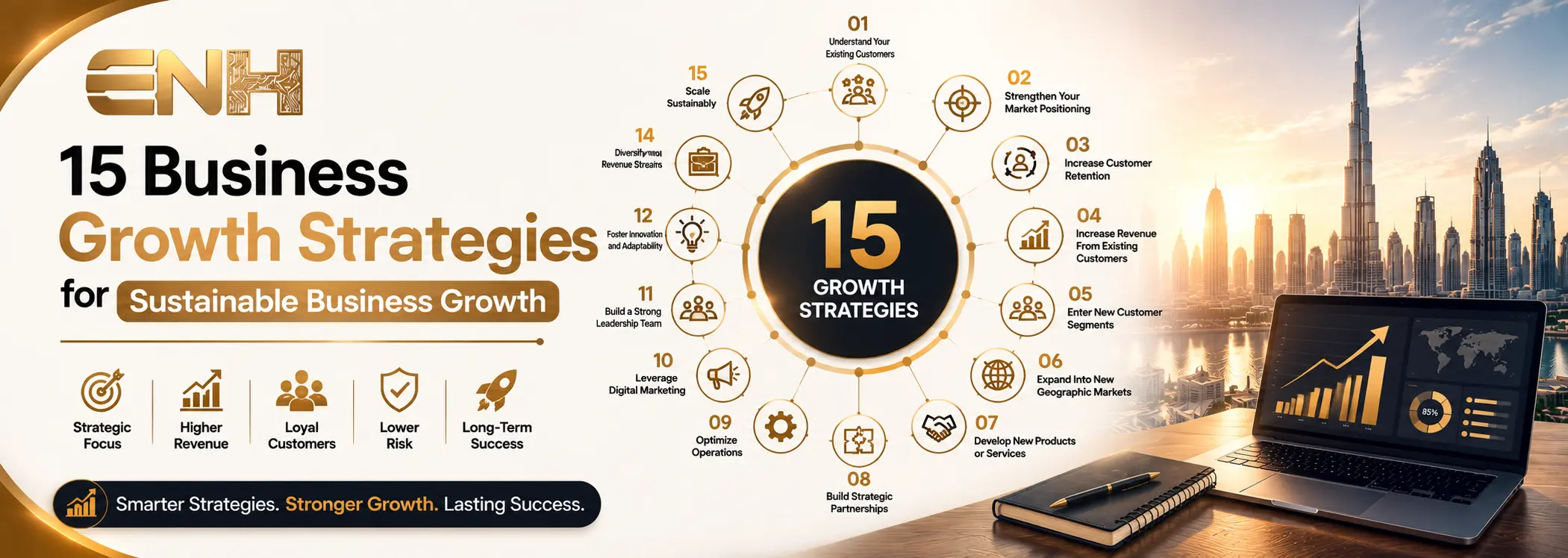
How to address it: Set measurable growth objectives with clear KPIs. Monitor margin, not just revenue, as growth accelerates. Strengthen internal capabilities before expanding scope. For businesses that want structured support with building a sustainable business growth strategy, external expertise can help identify which foundations need to be in place before the next growth phase begins.
How Can UAE Businesses Overcome These Challenges?
Across all of the challenges above, a few principles apply consistently:
Identify root causes rather than treating visible symptoms
Establish measurable KPIs and review them regularly
Use data to inform decisions rather than assumption or precedent
Review strategy, operations, financial performance, and market position at least quarterly
Seek external expertise when internal teams lack the experience or capacity to address a complex problem effectively
Business consulting becomes relevant when a business has identified a significant challenge but lacks the internal expertise or objectivity to address it independently. For businesses unfamiliar with the process, understanding what business consulting is and how it works can help determine whether external support is appropriate for the challenge they are facing.
When Should a Business Consider Working With a Consultant?
External consulting can be particularly useful when a company:
Cannot identify why growth has slowed despite genuine internal effort
Is experiencing recurring operational problems that internal fixes have not resolved
Plans to restructure, scale significantly, or enter a new market
Needs an independent assessment of strategy or performance before committing to a major decision
For businesses at this point, ENH Consulting's business consulting services in Dubai provide structured, outcome-focused support - starting with a clear diagnosis of the specific challenge before any recommendations are made.
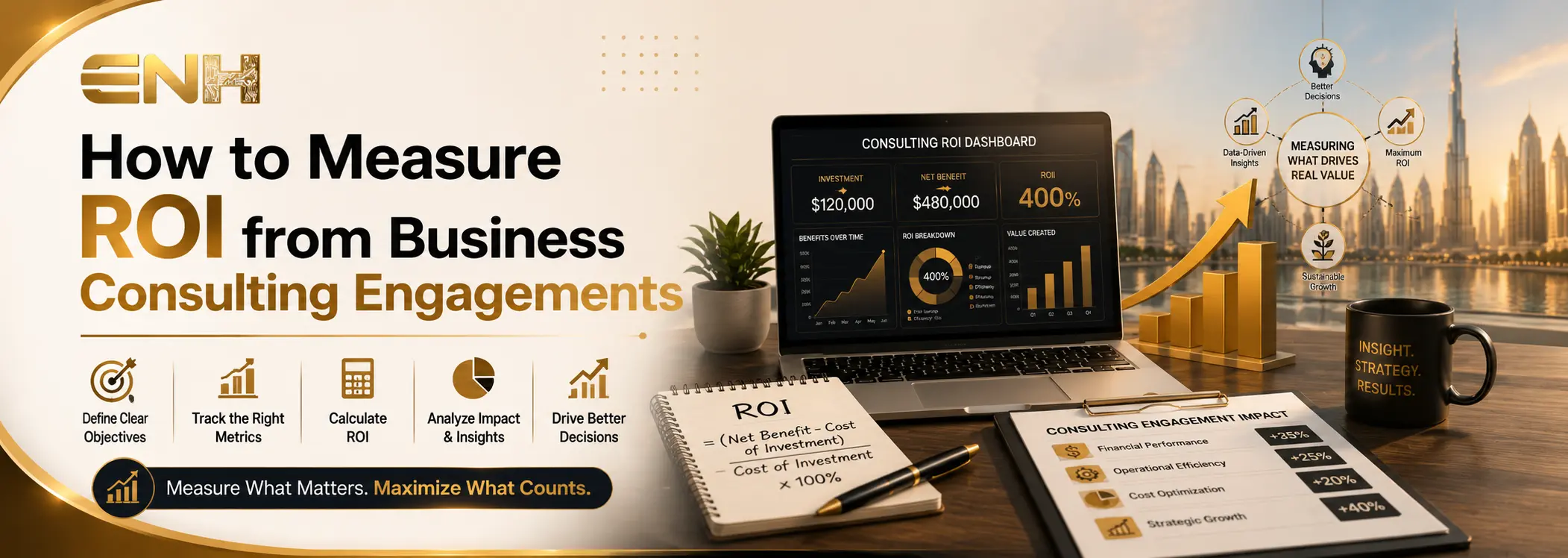
If you are evaluating whether a consulting engagement is worth the investment, understanding how to measure ROI from business consulting helps frame the decision practically.
Final Thoughts
The UAE provides real and substantial growth opportunities. But capturing those opportunities consistently requires businesses to actively manage competition, financial performance, people, operations, technology, regulatory requirements, and scalability - not just in growth periods, but continuously.
Businesses that identify challenges early, measure what matters, and adapt their strategy based on evidence are better positioned to build something that grows sustainably - not just quickly.
About Yash Mittal
Yash Mittal is the Founder of ENH Consulting with around 15 years of experience in business strategy, consulting, digital transformation, and organizational growth. He works closely with businesses to identify challenges, improve operations, evaluate growth opportunities, and build practical strategies aligned with long-term objectives. At ENH Consulting, Yash contributes insights across business consulting, AI consulting, business growth, process improvement, digital transformation, and strategic decision-making. His approach focuses on combining business understanding with practical, results-oriented solutions that help organizations improve performance and adapt to changing market conditions. Through his articles, Yash shares practical perspectives to help business owners, entrepreneurs, and decision-makers make more informed strategic decisions.